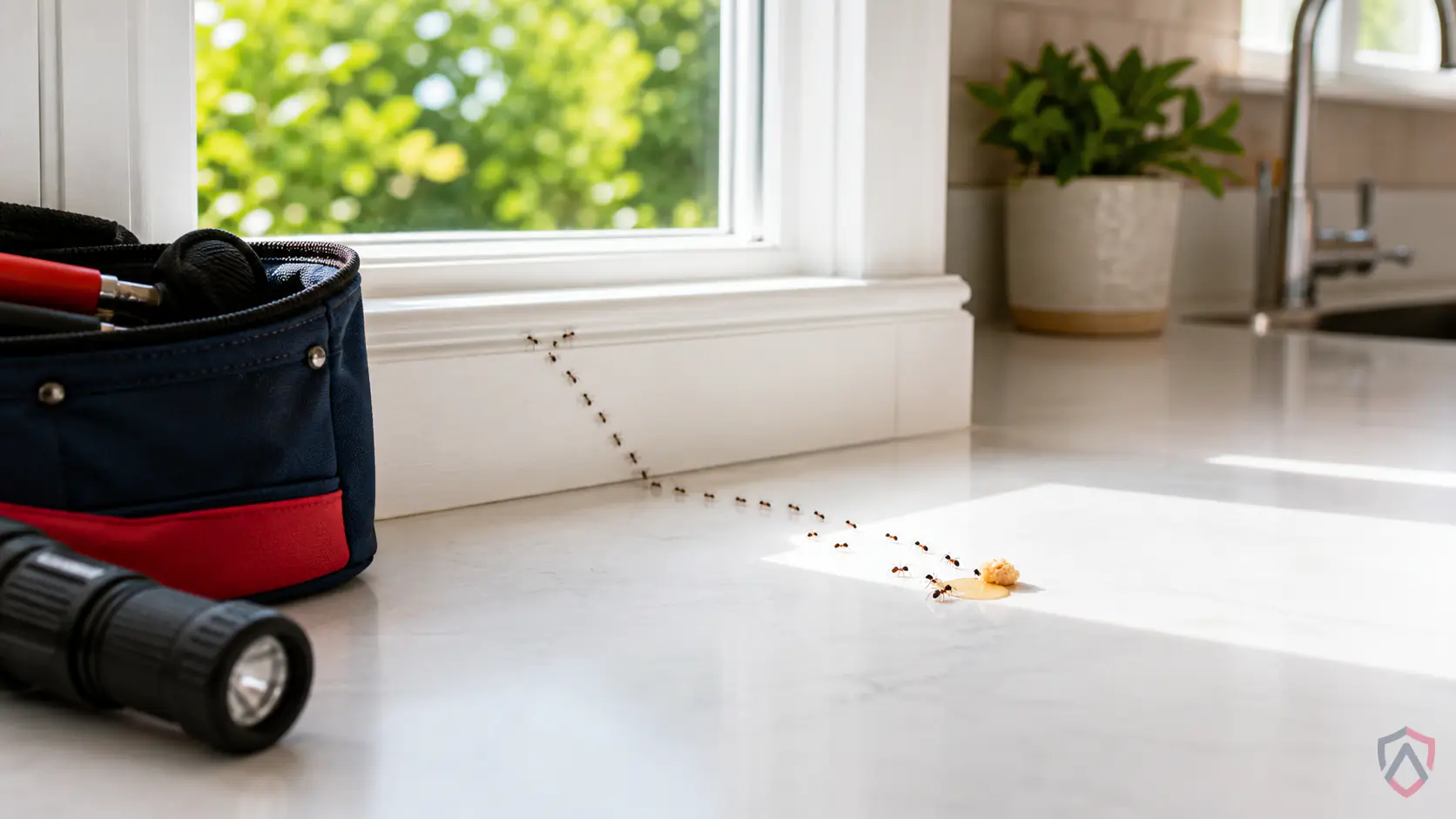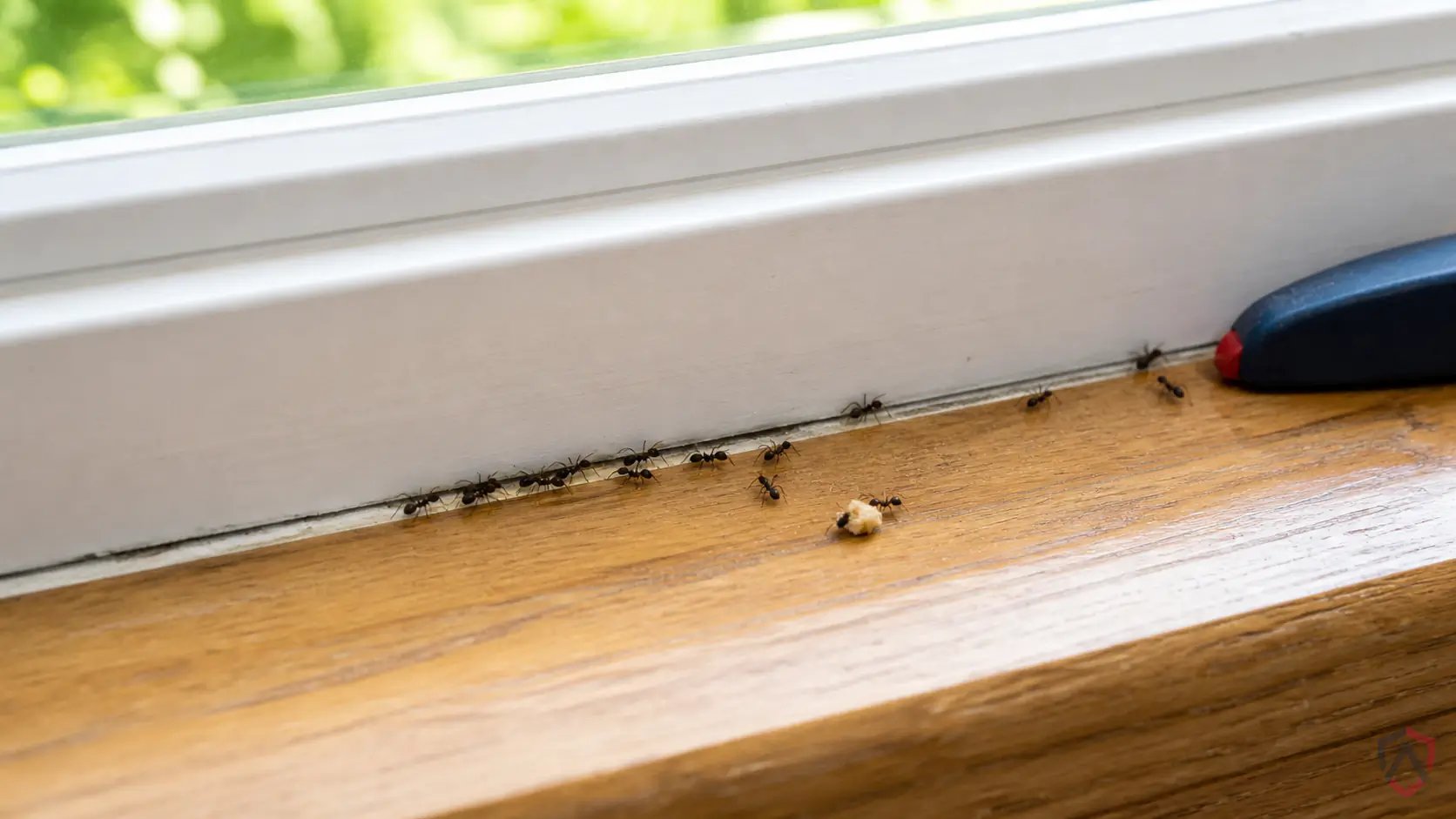

Every April, like ice-out and pothole season, the ants come back to the same kitchen counter. If this is your house, you’ve probably won the battle several years running, spray, clean, gone by June, and still lost the war, because the colony that sends those trails never went anywhere. Here’s why the spring kitchen invasion repeats, and what actually breaks the cycle.
Why spring, specifically
Minnesota ant colonies spend winter dormant below the frost line or tucked into wall voids. When soil warms in April, the colony wakes up hungry, with new larvae to feed and almost nothing blooming outside yet. Your kitchen is the first reliable food source of the year: crumbs, pet food, a sticky honey jar. By June, outdoor food like honeydew from aphids comes online and pressure often fades on its own, which is exactly what fools people into thinking the spray worked.
The colony never left
The trail you see is foragers, a small fraction of a colony that lives under your slab, in a wall void, under the stoop, or in a stump out back. Wiping out foragers with repellent spray is like fighting a restaurant by arresting its delivery drivers. The species matters too: little black ants and pavement ants are pantry nuisances, while odorous house ants (crush one; they smell like rotten coconut) are notorious for repeat performances and for splitting into multiple colonies when hit with repellents, and carpenter ants raise a structural question that deserves its own inspection.
Breaking the annual cycle
- ID before treatment, because bait preference differs by species and season
- Bait, don’t spray: slow-acting baits get carried back and fed to the queen and brood, which is the only way the colony itself dies
- Follow the trail backward to the entry gap, along baseboards, at the window frame, where the counter meets the wall, and seal it after the colony collapses, not before
- Hit it early: April baiting, when the colony is hungry and brood is developing, does more than July baiting ever will
- Fix the draw: pet bowls up overnight, syrups in sealed containers, the toaster crumb tray emptied more than annually
The honest caveat
Even a dead colony leaves a vacancy in good habitat, and your slab, stoop, and sunny foundation are good habitat. On high-pressure lots, a new colony can claim the territory in a season or two, which is why chronic repeaters do better with a spring perimeter treatment as routine maintenance than with an annual emergency. One-time fixes are real, but so is real estate.
If it’s every single year
Three springs in a row means it’s structural: an established colony network on the property. That’s findable, and finding it is the whole game.
Ankora treats spring ant cycles all over the Twin Cities, with a re-treat guarantee on covered pests. The inspection that maps your particular ants is free, call (651) 556-2666.
Seeing this pest around your home?
Ankora Pest Control offers a free inspection across the Twin Cities metro. We identify the problem, explain your options honestly, and only recommend what your home actually needs.