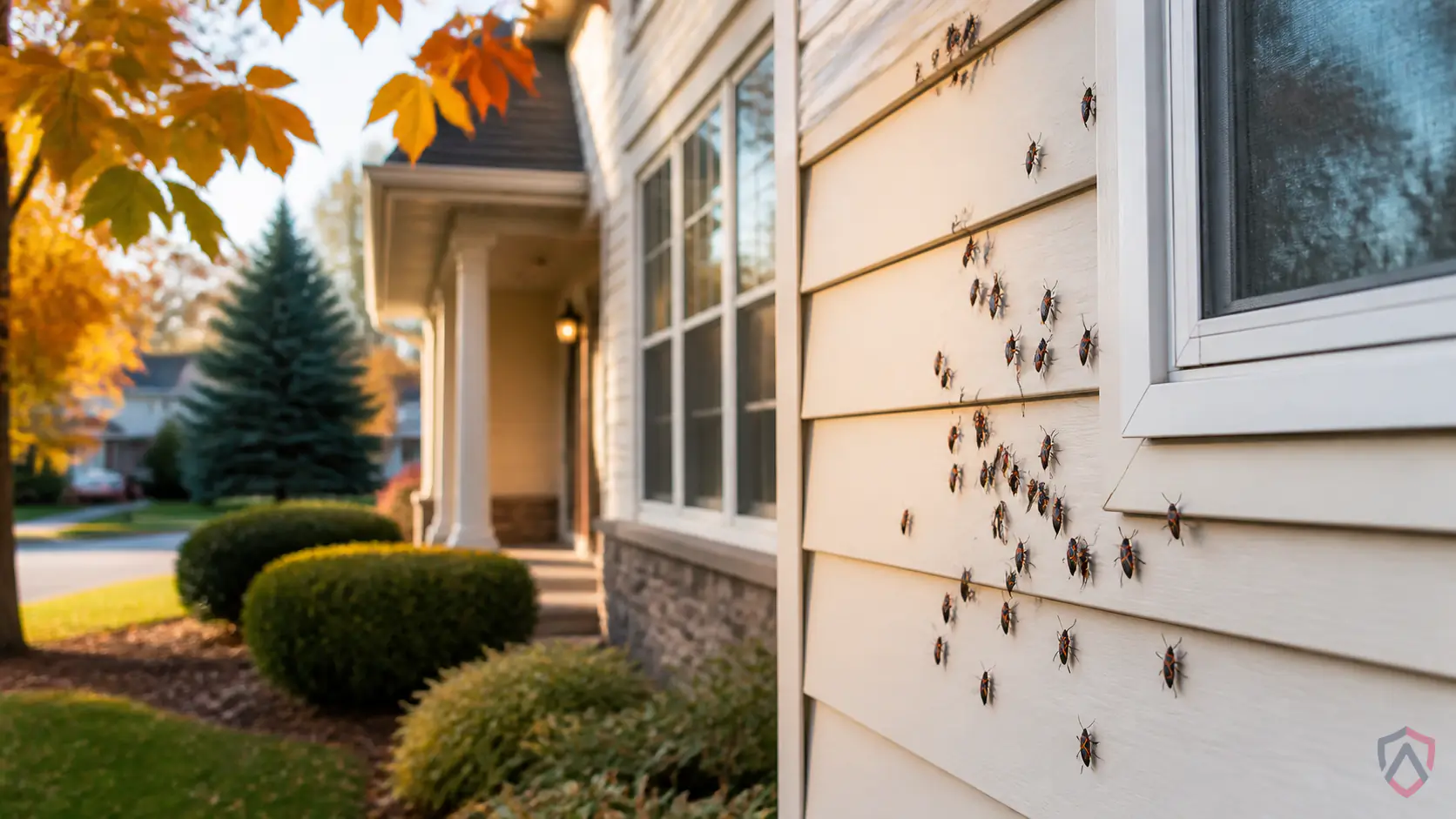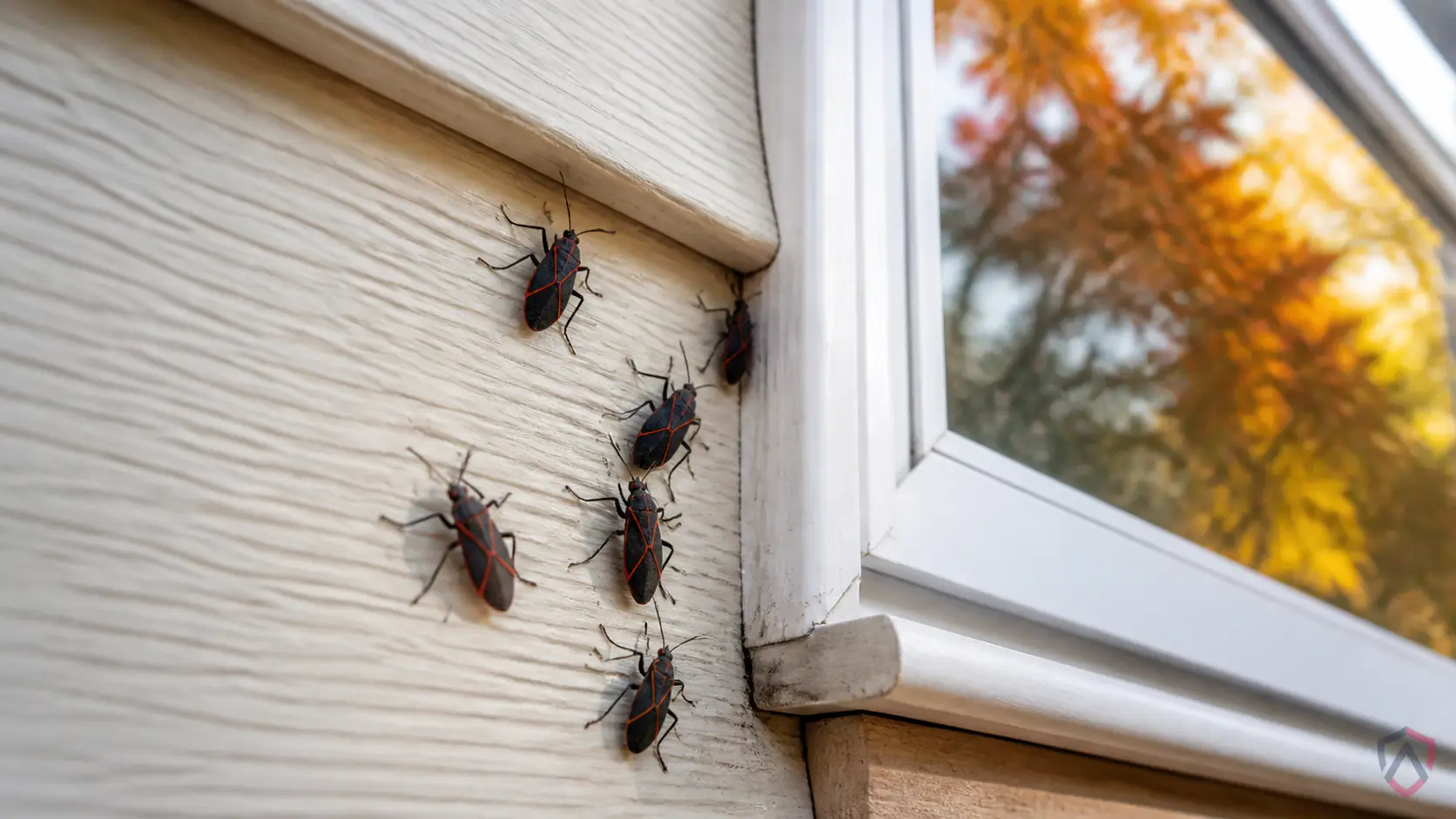
Every September we start getting the same call from Longfellow, Highland Park, and pretty much anywhere with mature boxelder or silver maple trees: the south wall of the house is crawling with black and red bugs. That’s the box elder bug, and the swarm you’re seeing is them hunting for a warm place to spend the winter. Your siding, unfortunately, qualifies.
Why they pick your house
Box elder bugs spend the summer feeding on the seeds of female boxelder trees, plus maples and ash. When afternoon temperatures drop into the 50s and 60s in late September, they fly to sun-warmed surfaces. Light-colored siding facing south or west heats up fast, so that’s where they stack up. From there they work into gaps behind trim, under soffits, and around window frames, then settle into wall voids for the winter.
What actually helps
- Seal what you can reach: silicone caulk around window frames, cable penetrations, and where siding meets the foundation.
- Repair torn screens and check that weep holes have screens made for them, not caulk.
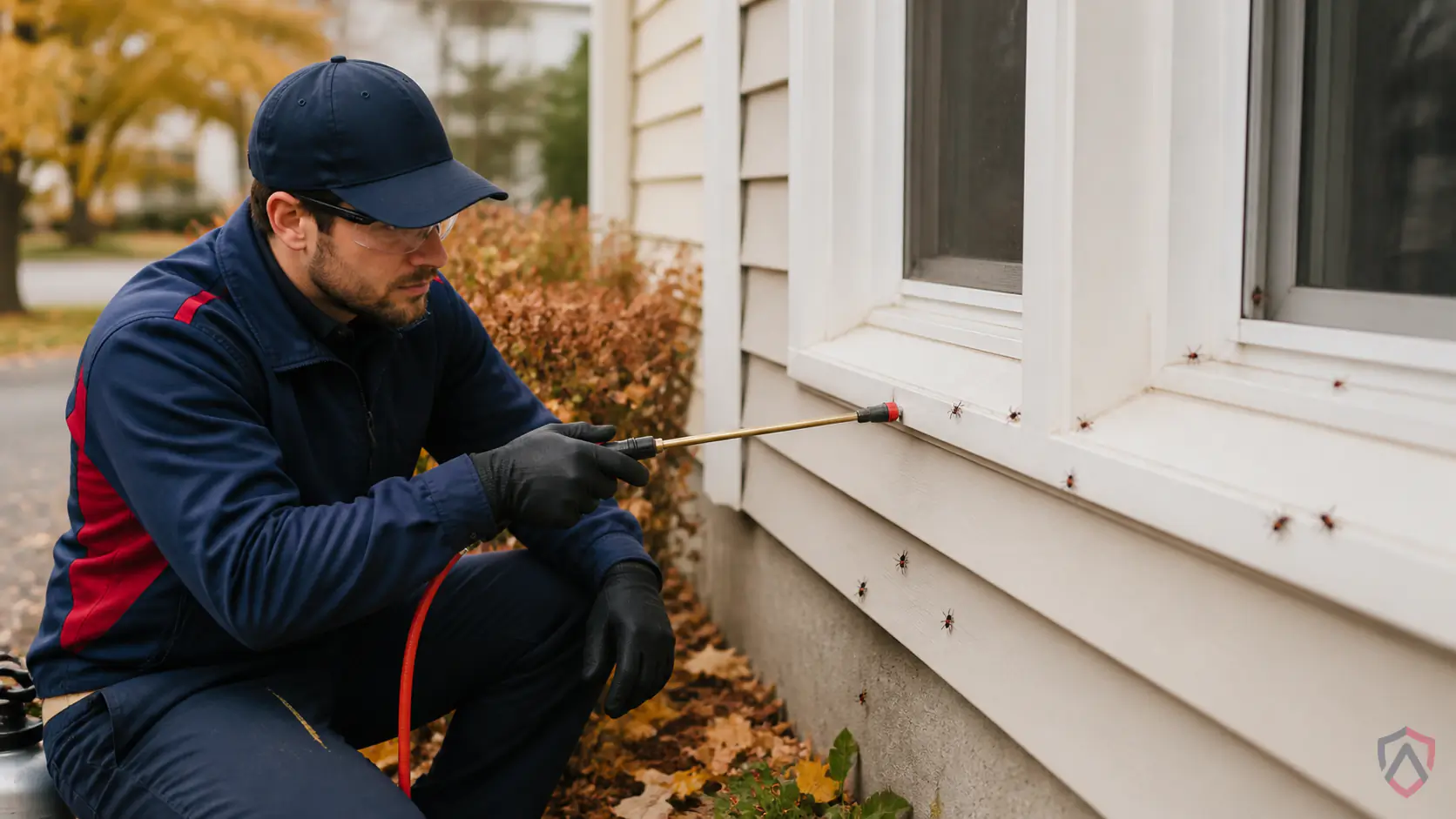
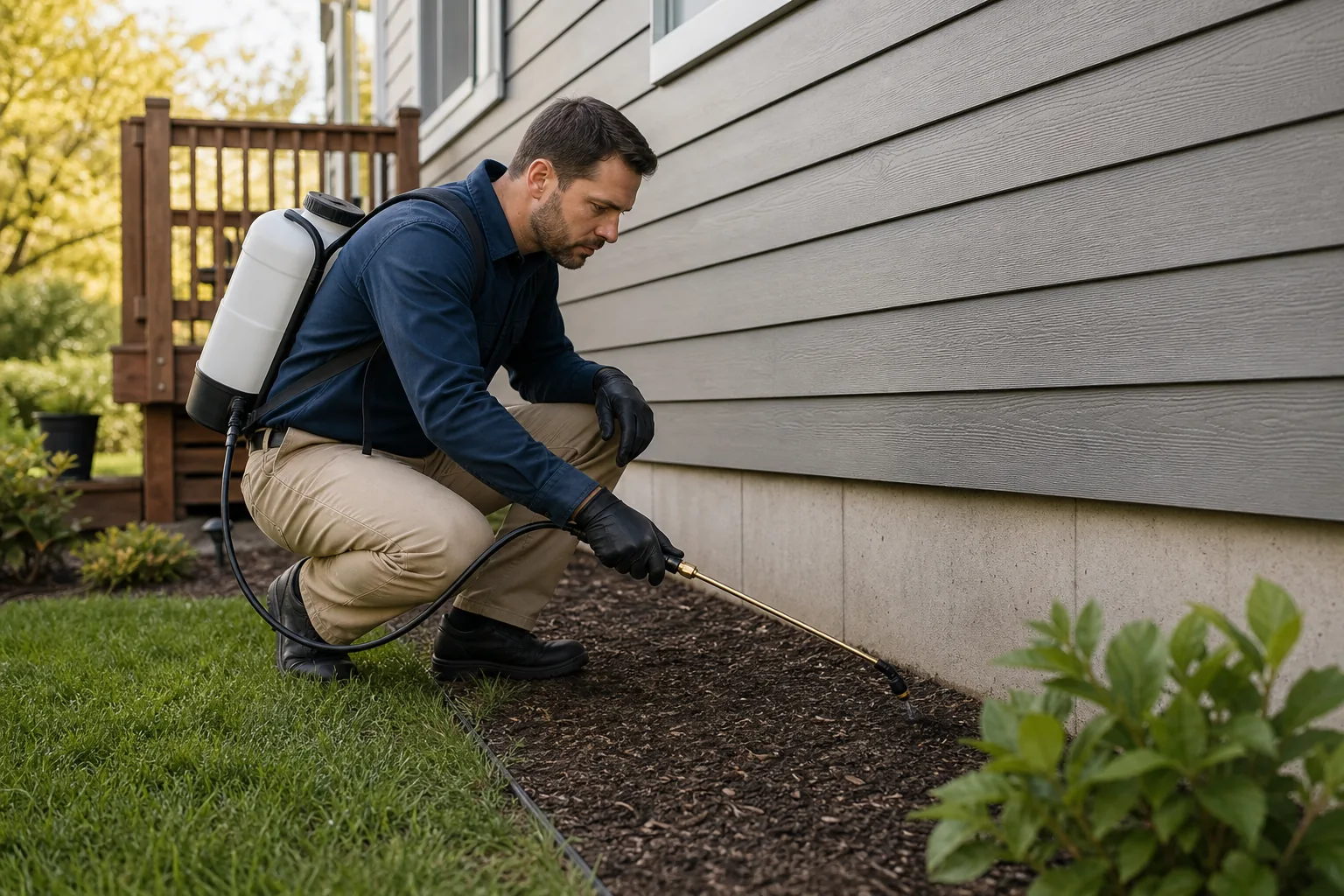
- Have the exterior treated in late August or early September, before the big flights start. Timing matters more than product here.
- Vacuum the ones that get inside. Don’t crush them on drywall or fabric because they stain.
What doesn’t help much
Spraying bugs one at a time with store-bought foam or soap kills the ones you hit and does nothing about the next thousand. Cutting down a boxelder tree sounds decisive, but these bugs fly a few blocks without any trouble, so unless the whole neighborhood clears its trees, you’ve spent a lot of money on firewood.
The honest caveat
Once bugs are inside your walls, no treatment reaches all of them. You’ll see stragglers wander out on warm winter days, usually near south-facing windows, into March. That’s not a failed treatment, it’s just where they were hiding when the barrier went down. The goal in fall is to cut the number that get in, and a well-timed exterior treatment does that dramatically.
When to call
If your house is the sunny one on the block and you go through this every year, get on the schedule before Labor Day. We treat the south and west walls, soffit lines, and entry points while the bugs are still on the trees.
Ankora Pest Control serves the whole Twin Cities metro and inspections are free. Call (651) 556-2666 and we’ll take a look before the swarm season starts.
Seeing this pest around your home?
Ankora Pest Control offers a free inspection across the Twin Cities metro. We identify the problem, explain your options honestly, and only recommend what your home actually needs.