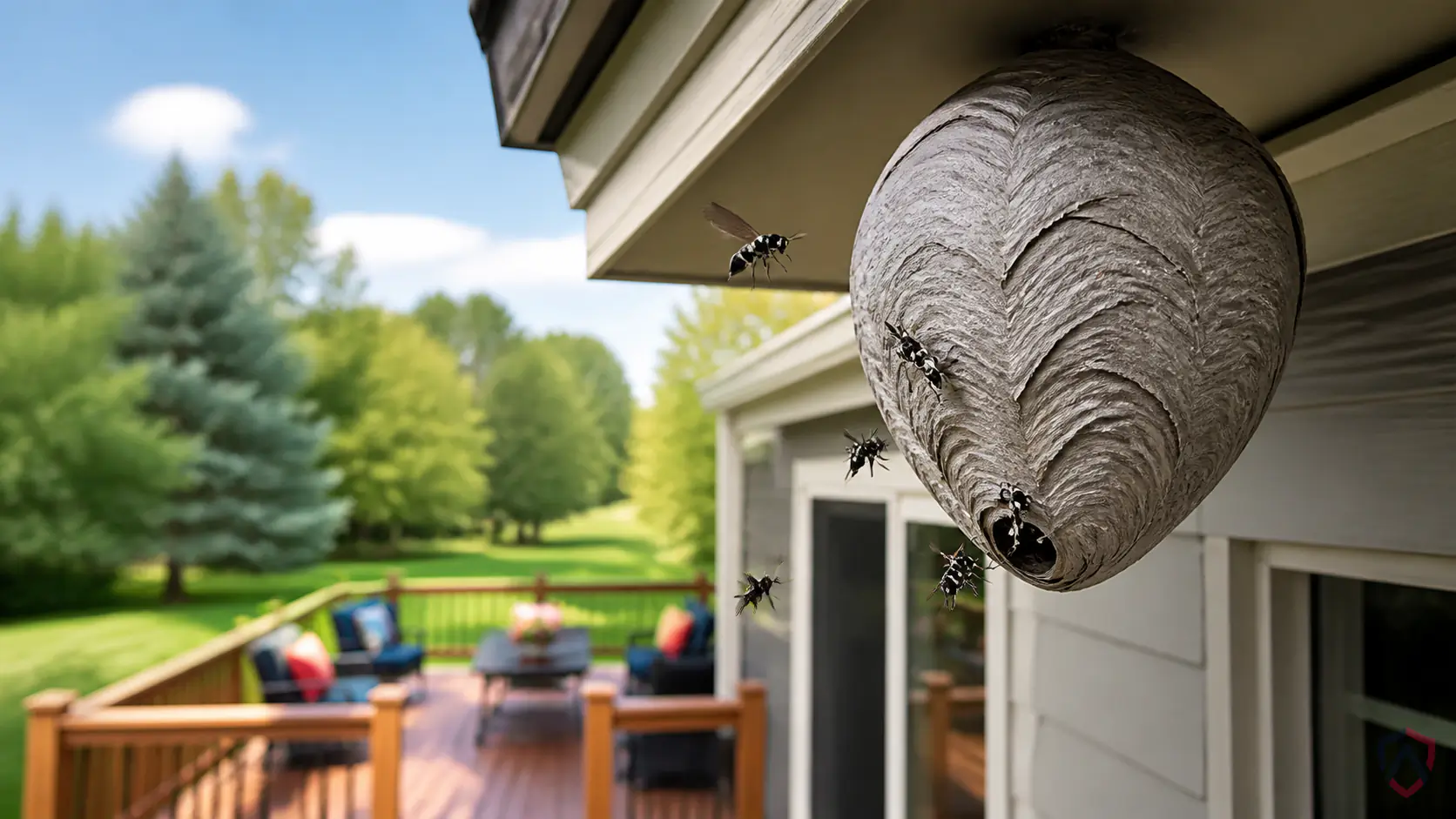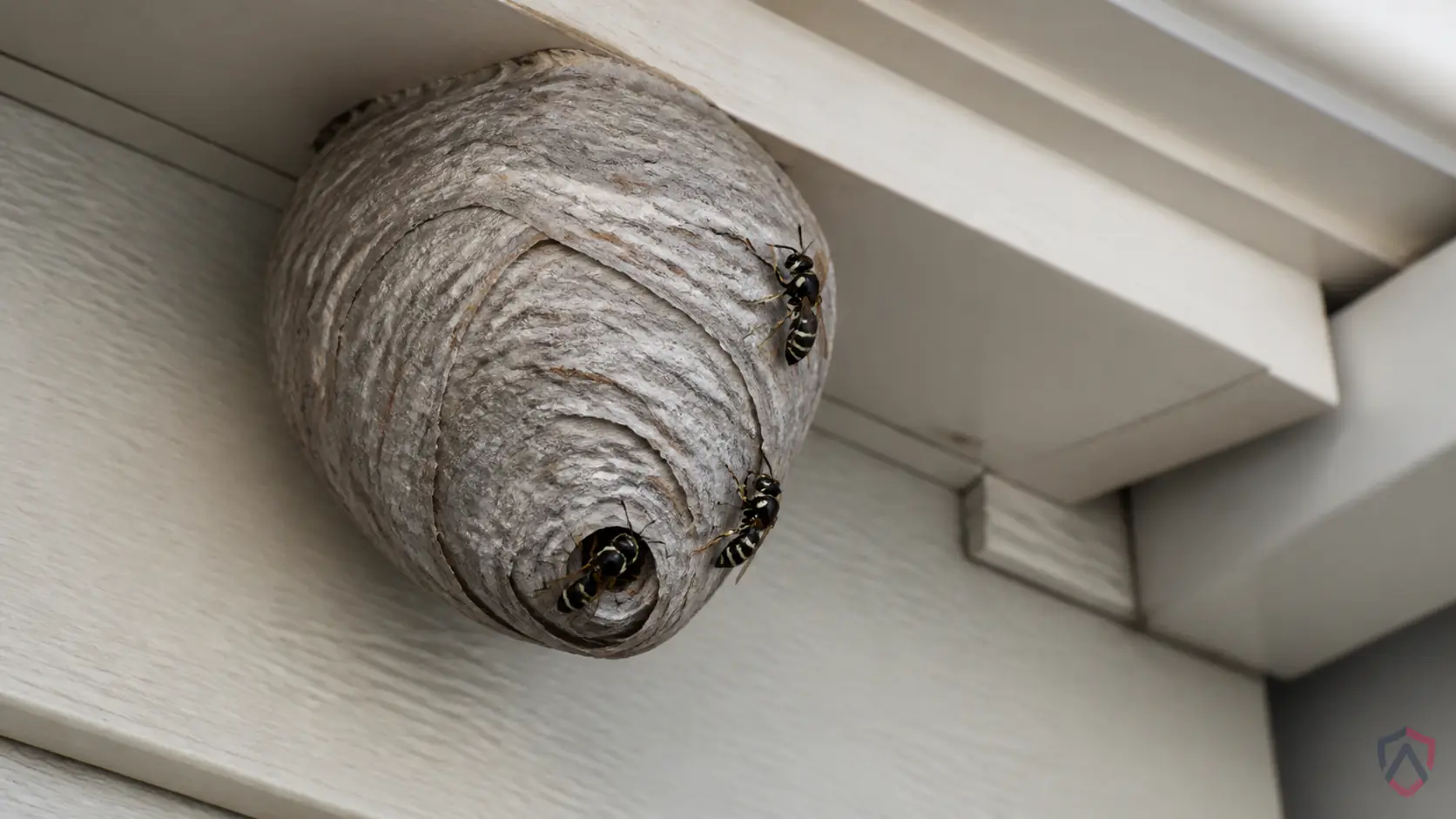
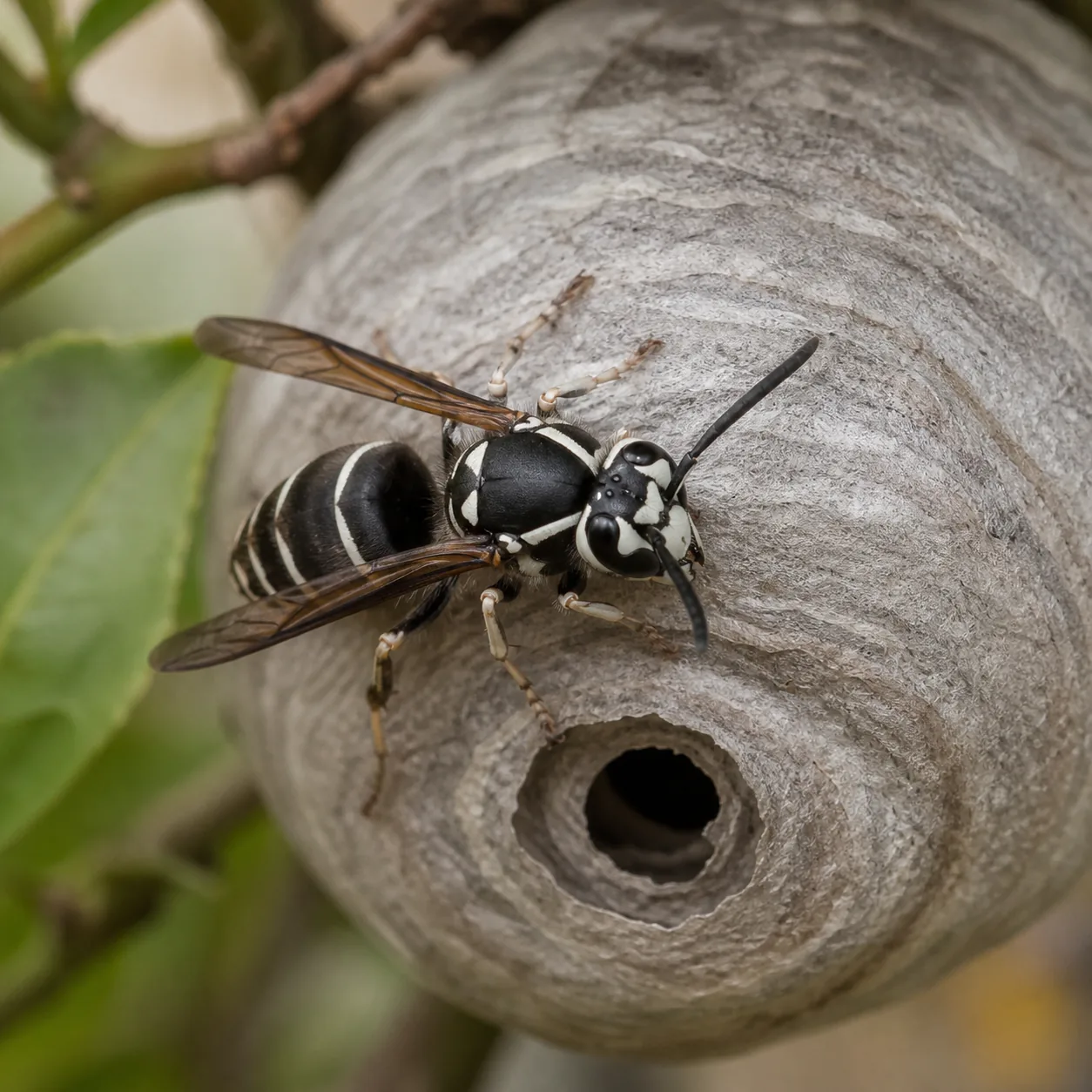
The gray, football-shaped paper nest hanging in a maple or under a deck rail belongs to the bald-faced hornet, which is technically a big black-and-white yellow jacket rather than a true hornet. Naming aside, they’ve earned their reputation. Of all the stinging insects we deal with in the Twin Cities, these defend their nest the most aggressively.
What you’re up against
By late August, a nest can hold 300 to 700 workers. They guard a defensive zone around the nest and will chase intruders well beyond it. Each hornet can sting repeatedly, and they have a trick most people don’t know about: they can spray venom, and they aim for the eyes. They’re also good at recognizing and targeting faces. A ladder, a can of spray with a 20-foot reach, and adrenaline is not a plan.
Why the spray can fails
Aerosol streams knock down the hornets they hit, but a nest at any height means you’re hitting the outer shell while several hundred workers pour out of the bottom entrance. Then you’re standing on a ladder. Most stinging incidents we hear about follow exactly this script, usually at dusk when the homeowner figured they’d be sleepy. They’re less active at dusk, not asleep.
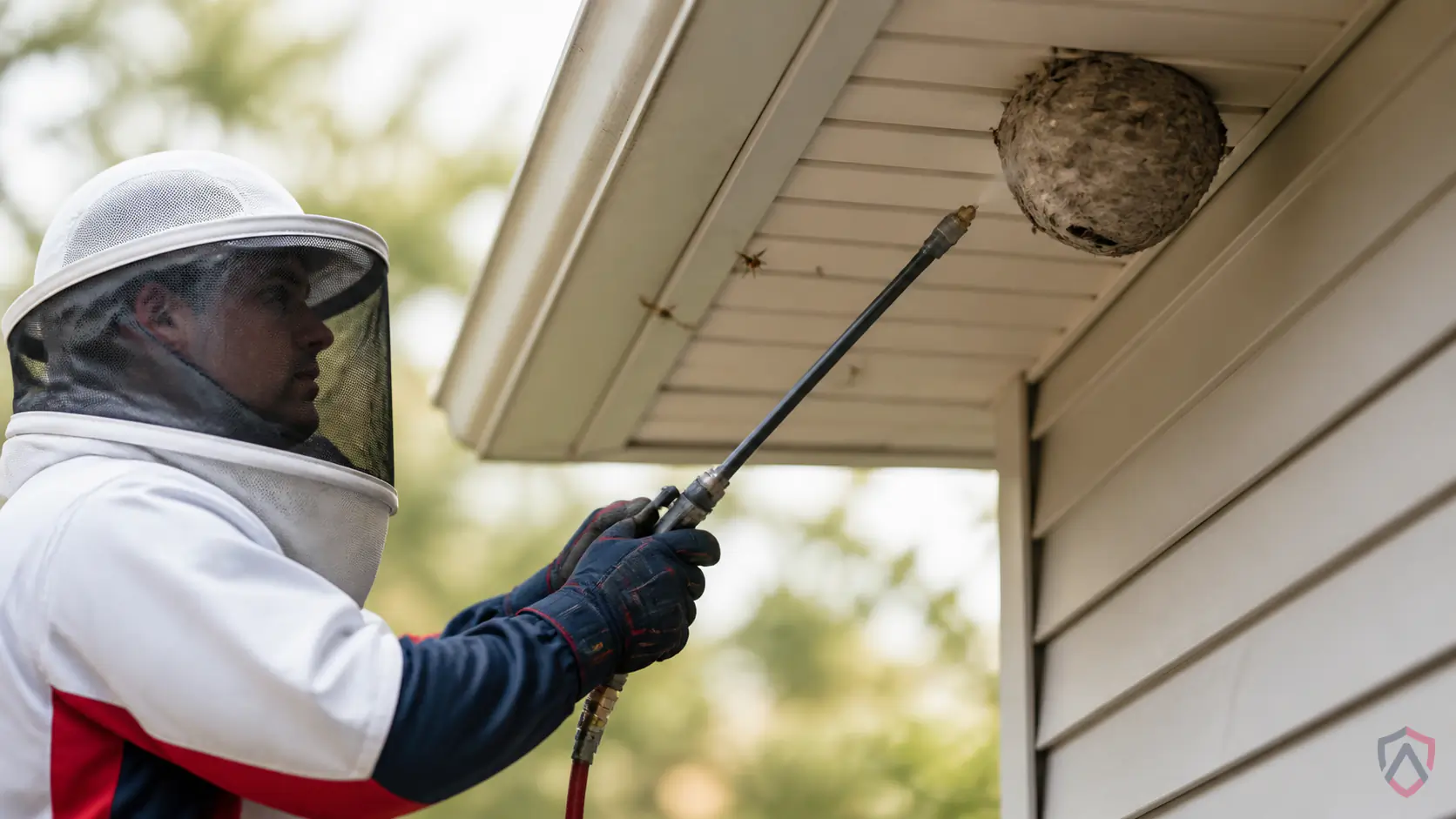
How professional removal works
- Full bee suit, treated from a safe angle, usually early morning or evening
- Product applied directly into the entrance so it reaches the interior comb
- Nest removed once activity ceases, since a treated nest left up can drip and attracts scavengers
The eco-honest part: sometimes leave it
Here’s the caveat you won’t hear from every company. Bald-faced hornets are useful predators; a big colony eats flies and caterpillars all summer, and they visit flowers too. If the nest is 25 feet up a spruce in the back corner of a lot in, say, Shoreview, and nobody works or plays near it, the reasonable call can be leaving it alone. Every colony dies at hard frost, usually by early November in the metro, and the nest is never reused. We’ll tell you when treatment isn’t worth the money.
When removal is the right call
Nests near doors, decks, play areas, garage entries, or at head height in a hedge should go, especially if anyone in the household has a sting allergy. Nests found while trimming shrubs are the classic surprise sting scenario in September.
Found a gray paper nest on the property? Don’t test its mood. Ankora offers free inspections across the Twin Cities metro, call (651) 556-2666 and we’ll give you a straight answer on whether it needs to come down.
Seeing this pest around your home?
Ankora Pest Control offers a free inspection across the Twin Cities metro. We identify the problem, explain your options honestly, and only recommend what your home actually needs.