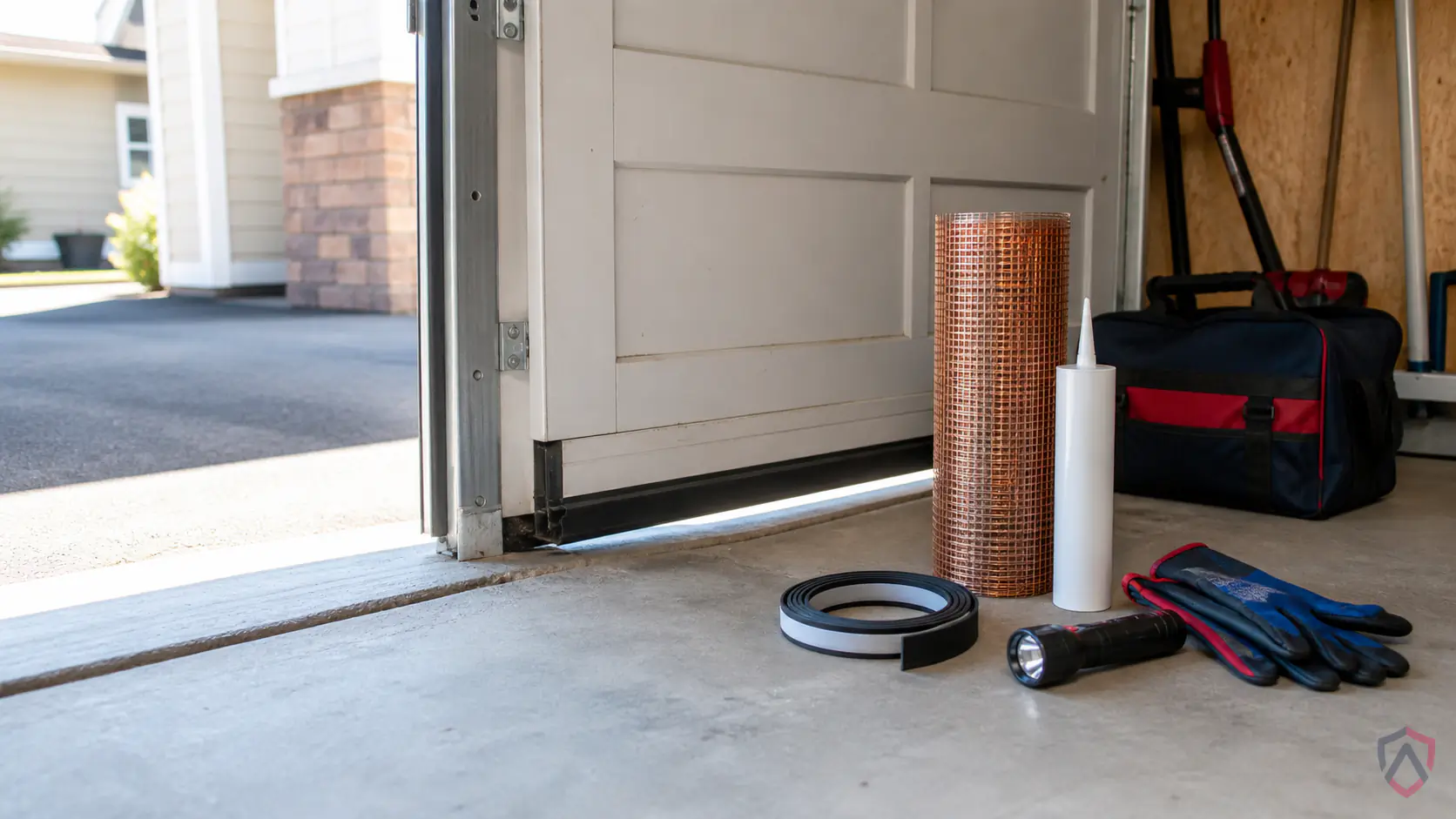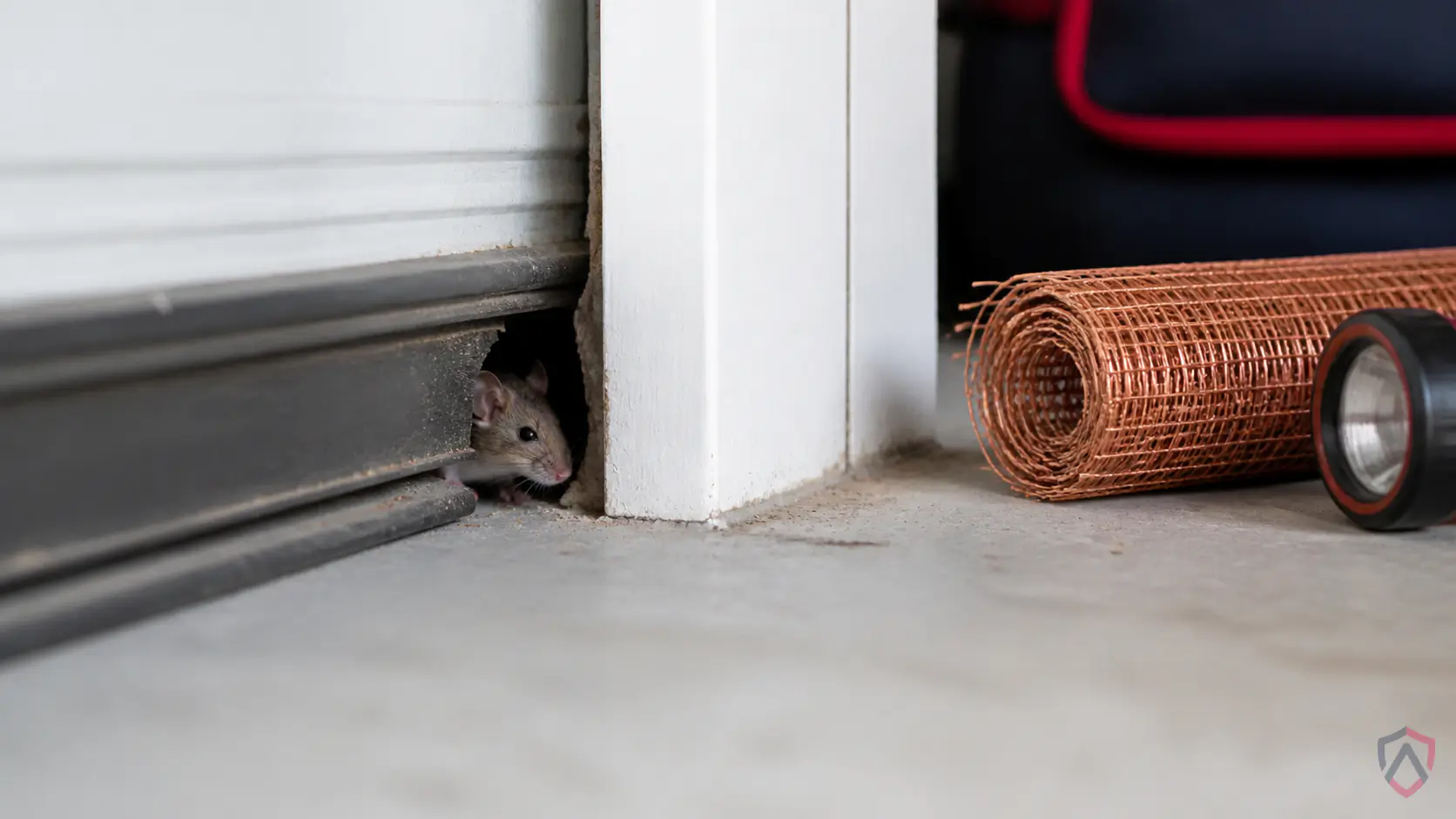
Ask any tech where mice get into a Twin Cities house and the garage door will come up in the first breath. The bottom corners of an overhead door are the single most common rodent entry we find, and October, when night temperatures drop into the 30s, is when the traffic starts.
Do the daylight test
Close the garage door on a sunny day, kill the lights, and look at the bottom edge from inside. Anywhere you see daylight, a mouse sees a door. They only need a gap about a quarter inch tall, the height of a dime standing on edge, and the corners are where seals wear, concrete slopes, and door tracks leave a triangle of open space. Check the sides too, where the vertical weather seal meets the slab.
Fixing the bottom seal
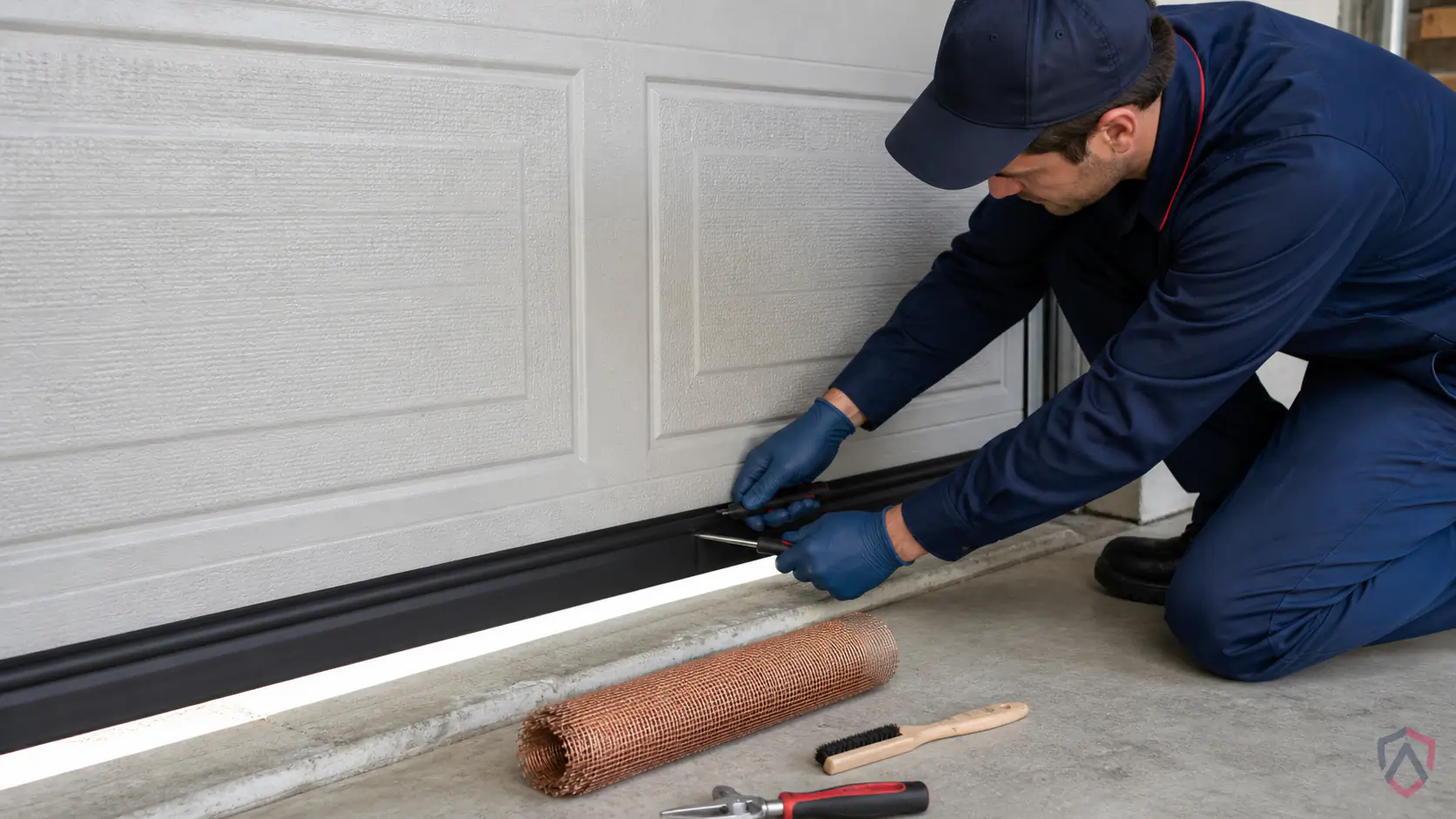
- Replace a flattened or cracked bottom seal (the astragal) with a new T-style or bead-style seal sized to your door’s retainer track. A stiff, full-height seal beats a worn one by a mile.
- If the slab is uneven, consider a threshold seal glued to the concrete so the door closes against a raised lip.
- For the corners, add rodent-rated corner seals or guards. Standard vinyl weatherstrip is a snack; mice gnaw through it in a night. Products with embedded steel or aluminum fabric hold up.
Don’t forget the service door and the house door
The side entry door needs an intact sweep and tight weatherstripping. More important still is the door from the garage into the house. A quality door sweep there is your last line of defense, because even a well-sealed garage gets breached when the overhead door stands open on a fall evening. A mouse that gets into the garage shouldn’t be able to get into the kitchen.
Materials that work, and one that doesn’t quite
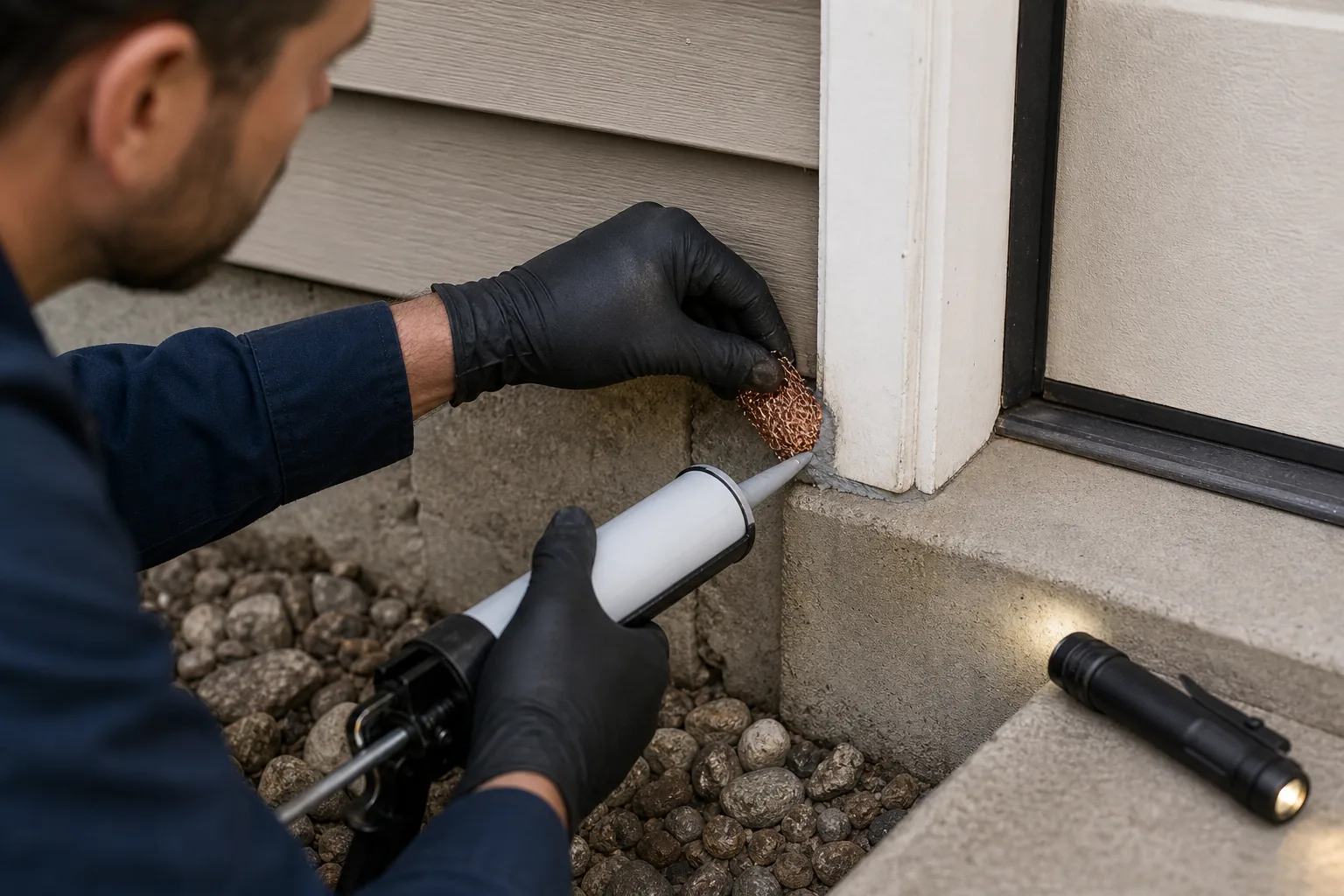
For gaps around the garage elsewhere, copper mesh packed tight and capped with sealant is the standard. Plain steel wool gets recommended everywhere online, but it rusts, shrinks, and stains concrete, so treat it as temporary at best. Spray foam alone is not rodent-proof; mice chew through it easily unless it’s backed by mesh.
The honest limit of this project
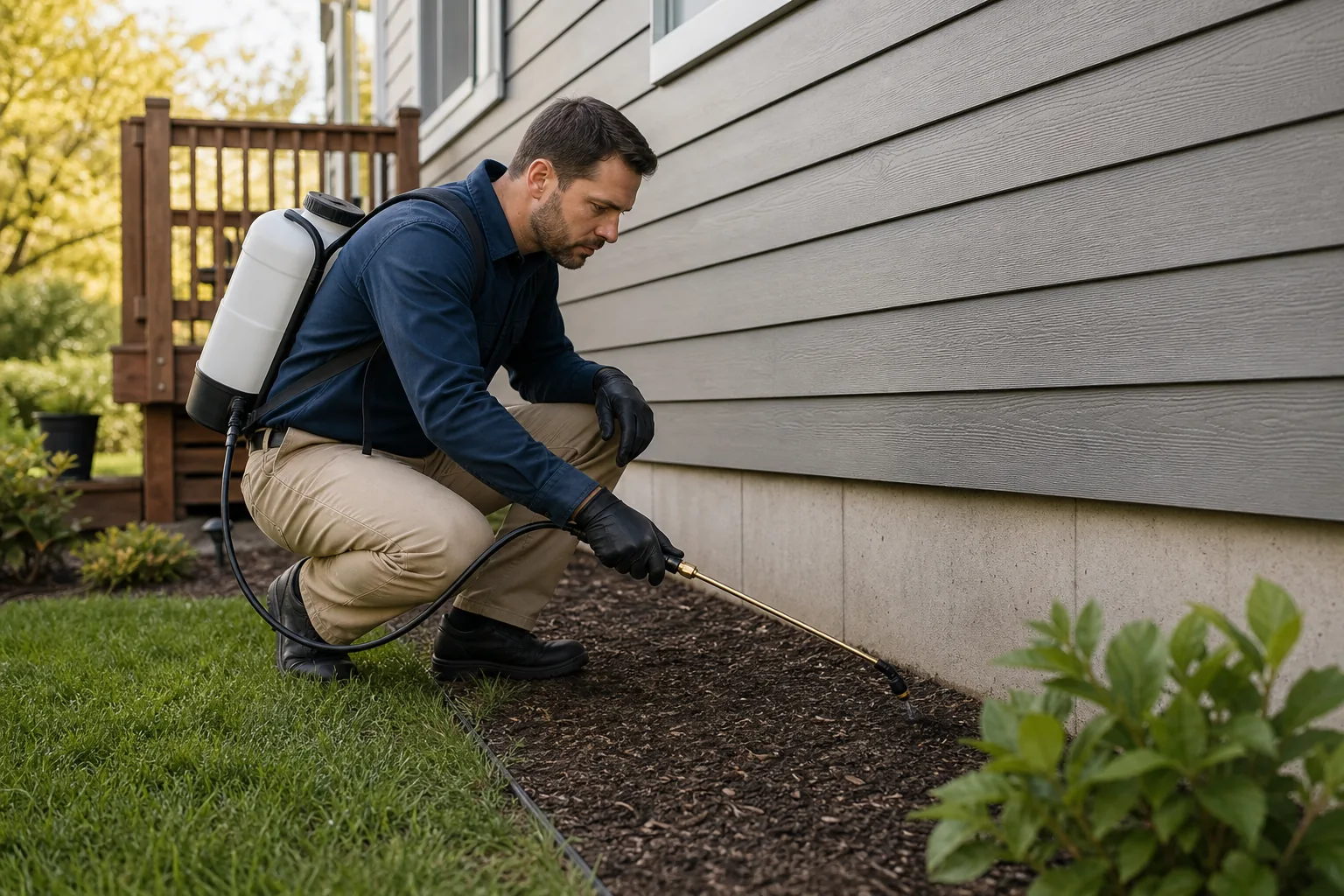
Sealing the garage door is necessary but rarely sufficient. If the sill plate has gaps, or the line where siding meets foundation is open behind the shrubs, or an unscreened dryer vent sits 18 inches off grade, mice will use those instead. A proper exclusion job walks the entire foundation. And if mice are already inside, sealing can trap them in, so trapping comes first.
Want a second set of eyes? Ankora does free rodent entry inspections across the metro and we’ll show you every gap we find. Call (651) 556-2666.
Seeing this pest around your home?
Ankora Pest Control offers a free inspection across the Twin Cities metro. We identify the problem, explain your options honestly, and only recommend what your home actually needs.