
Sometime around Labor Day, the chirping starts. It’s coming from the basement, it stops the moment you walk down the stairs, and it starts again the second you’re back on the couch. That’s a field cricket, and his timing isn’t a coincidence.
Why crickets move in come fall
Field crickets spend the summer outdoors in Twin Cities lawns and gardens. As August nights slide into the 50s, males keep calling for mates and everyone starts drifting toward warmth. Foundations leak heat at window wells, sill gaps, and dryer vents, so crickets follow the warm air right in. The chirp itself is temperature-driven; crickets chirp faster in warm air, slower in cold, reliably enough that an old formula estimates temperature from chirp counts.
Finding the chirper
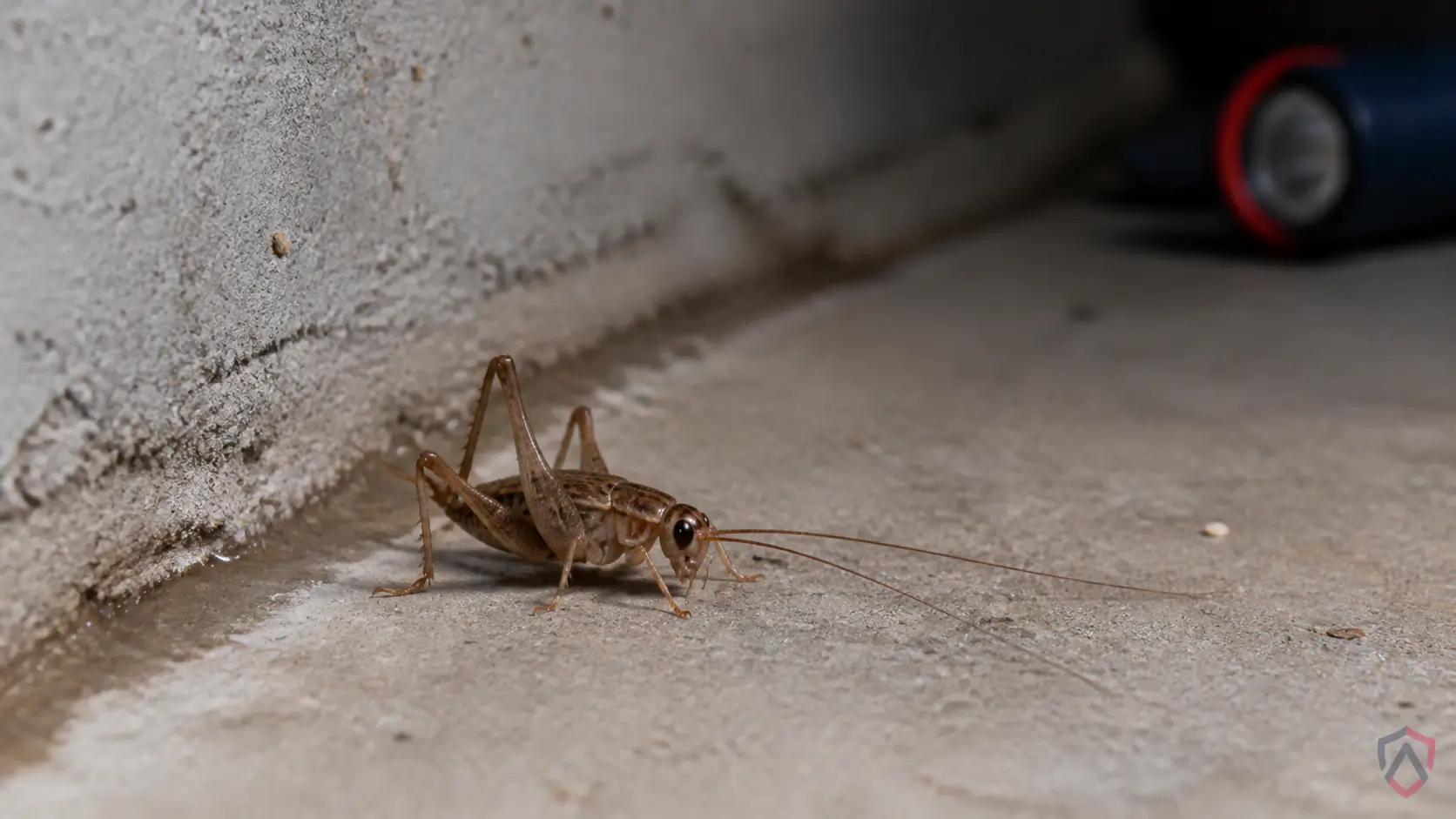
Chirps bounce off concrete walls, which makes them maddening to locate. A few tricks: triangulate from two spots in the room, look near the water heater and furnace where it’s warmest, and check under stored boxes and behind the bottom stair. Male field crickets are black, about an inch, and usually within a few feet of a wall. A couple of glue boards along the wall edges will typically catch him within a night or two.
Or is it camel crickets
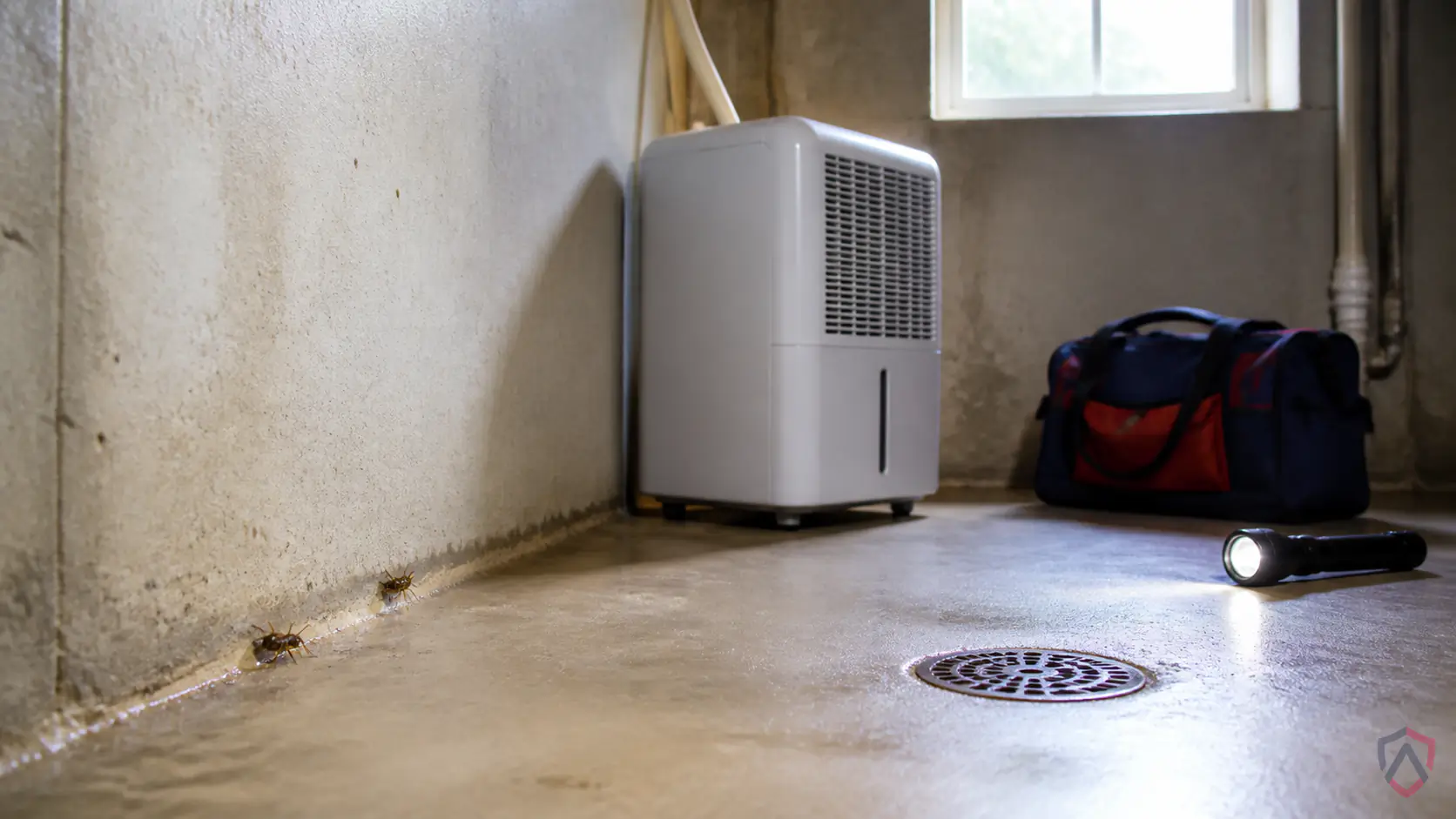
If what you’re seeing is tan, humpbacked, silent, with enormous jumping legs, that’s a camel cricket, a different situation. They don’t chirp and they love the same conditions as house centipedes: damp stone or block foundations, sump areas, crawl spaces. They also have an unnerving habit of jumping toward whatever startles them. Camel crickets in numbers signal a moisture problem worth fixing with a dehumidifier and sealing, not just traps.
The honest bit: a few crickets isn’t an infestation
Field crickets can’t sustain a population in a dry basement. They come in during a few weeks of fall, sing, annoy you, and die. Two or three crickets in September is normal Minnesota life and doesn’t justify a treatment package. What justifies attention is volume, dozens rather than a couple, or the entry points letting them in, because a gap that admits crickets also admits mice, spiders, and boxelder bugs.
What we’d actually do
- Seal gaps at window wells, sill plate, and utility penetrations
- Fit door sweeps on walkout and garage doors
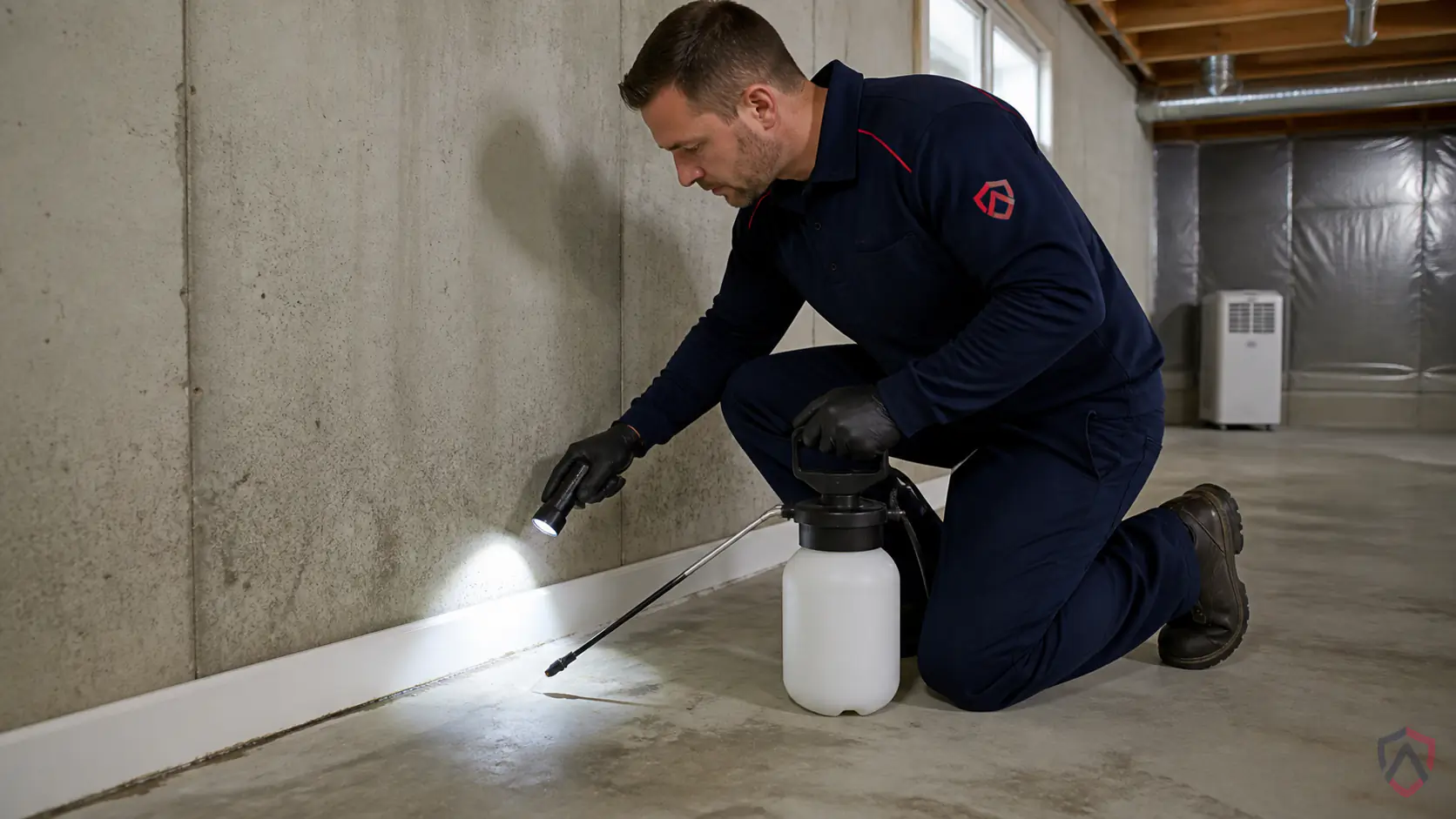
- Place glue monitors to confirm what else is active down there
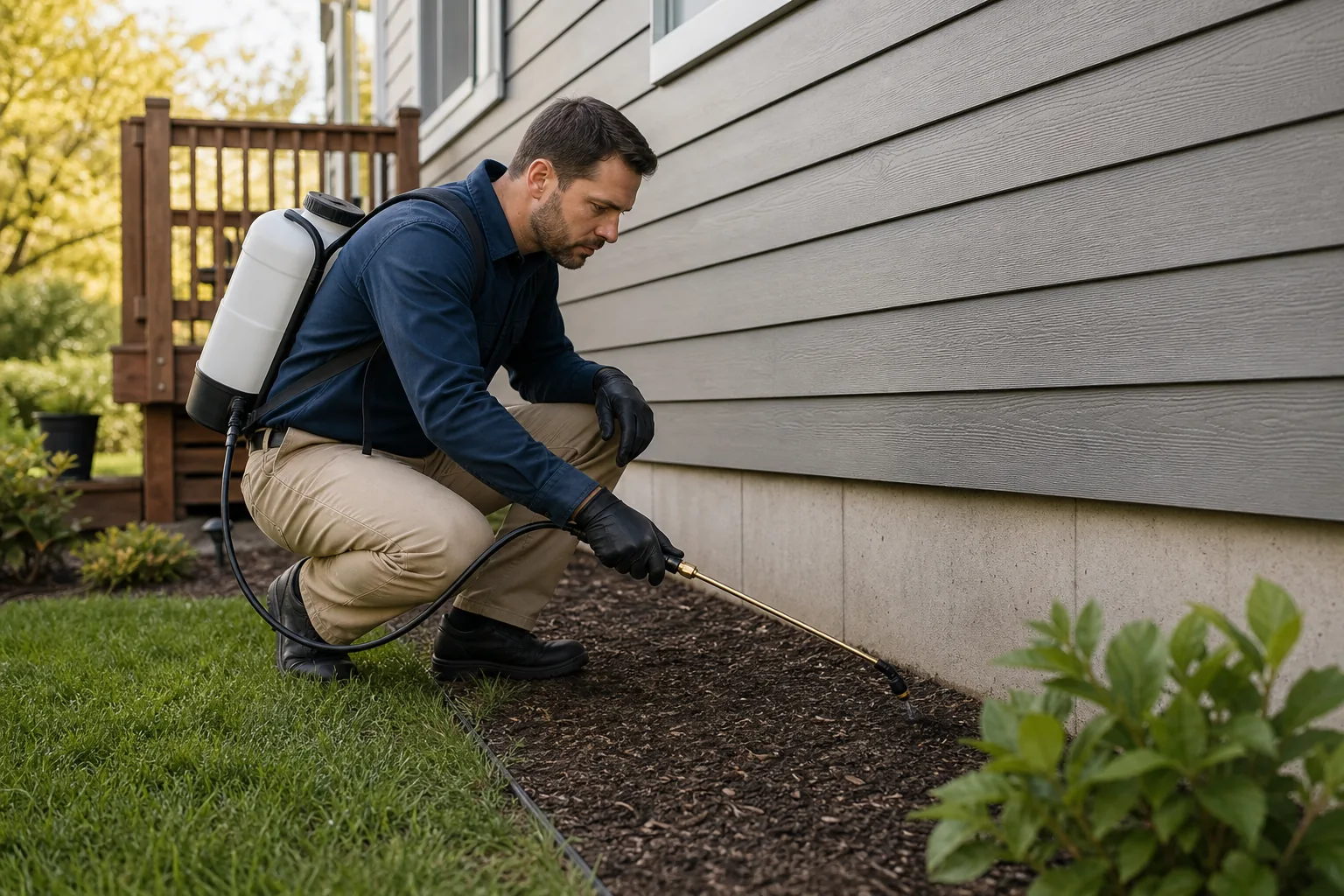
- Treat the exterior foundation band if pressure is heavy
If your basement sounds like a nature documentary or you’re catching more than the odd fall visitor, we’ll take a look for free. Ankora serves the whole Twin Cities metro, (651) 556-2666.
Seeing this pest around your home?
Ankora Pest Control offers a free inspection across the Twin Cities metro. We identify the problem, explain your options honestly, and only recommend what your home actually needs.