Seeing a big black ant in the kitchen in April puts Minnesota homeowners on edge, and fair enough: carpenter ants are the state’s most significant wood-destroying insect. But one ant is not a verdict. Here’s how we actually tell the difference between foragers passing through and a colony living in your framing.
What carpenter ants do and don’t do
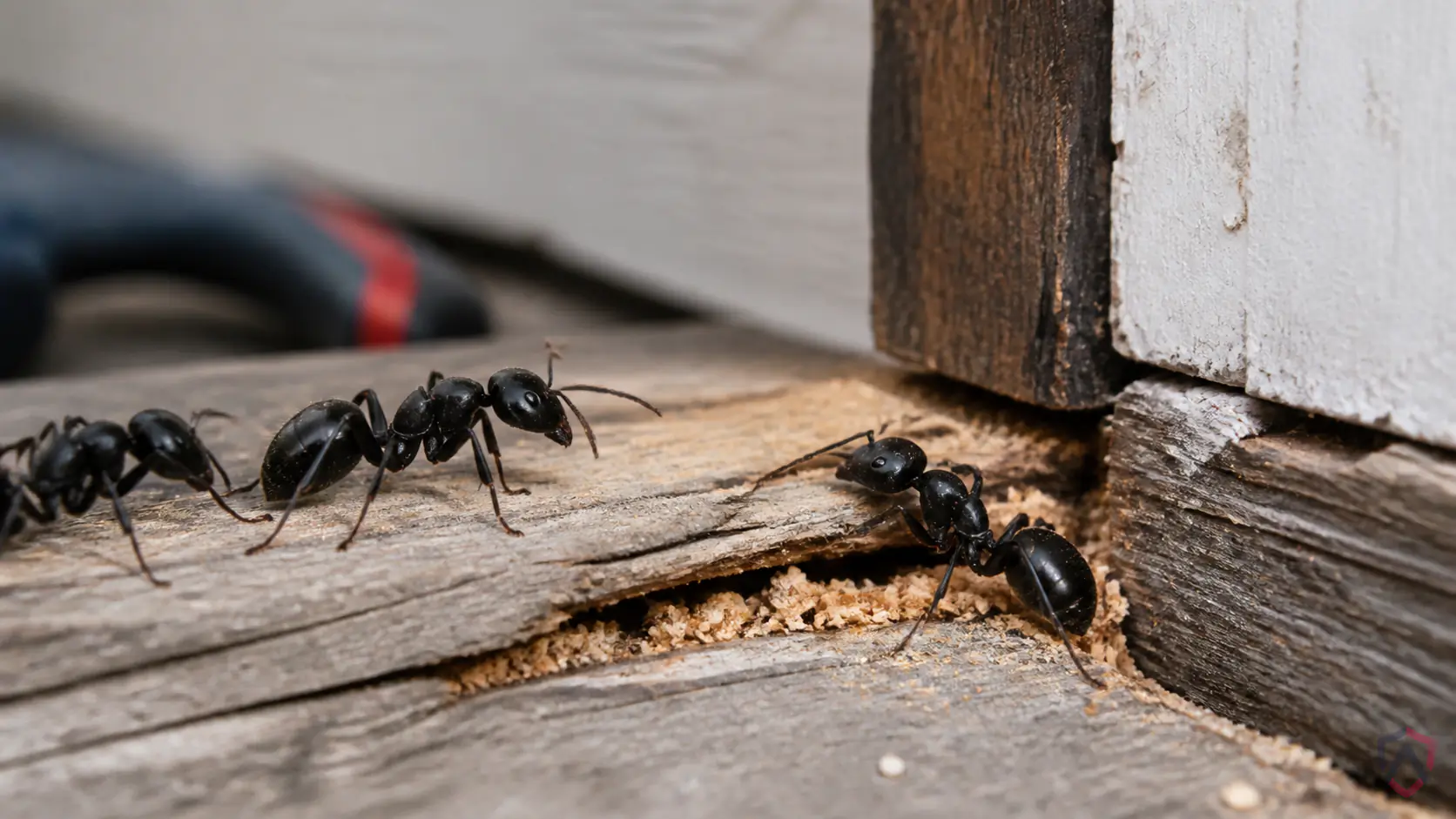
Unlike termites, carpenter ants don’t eat wood. They excavate it, chewing smooth galleries to house the colony, and they strongly prefer wood that’s been softened by moisture. The black carpenter ant, our most common species, typically keeps its parent colony outside in a stump, log pile, or hollow tree, and establishes satellite colonies in structures where conditions suit. Those conditions are almost always a water problem: leaking window flashing, a chronically damp rim joist, a deck ledger, a roof edge with ice dam history, which is half the roofs in the Twin Cities.
Signs that separate foragers from a nest
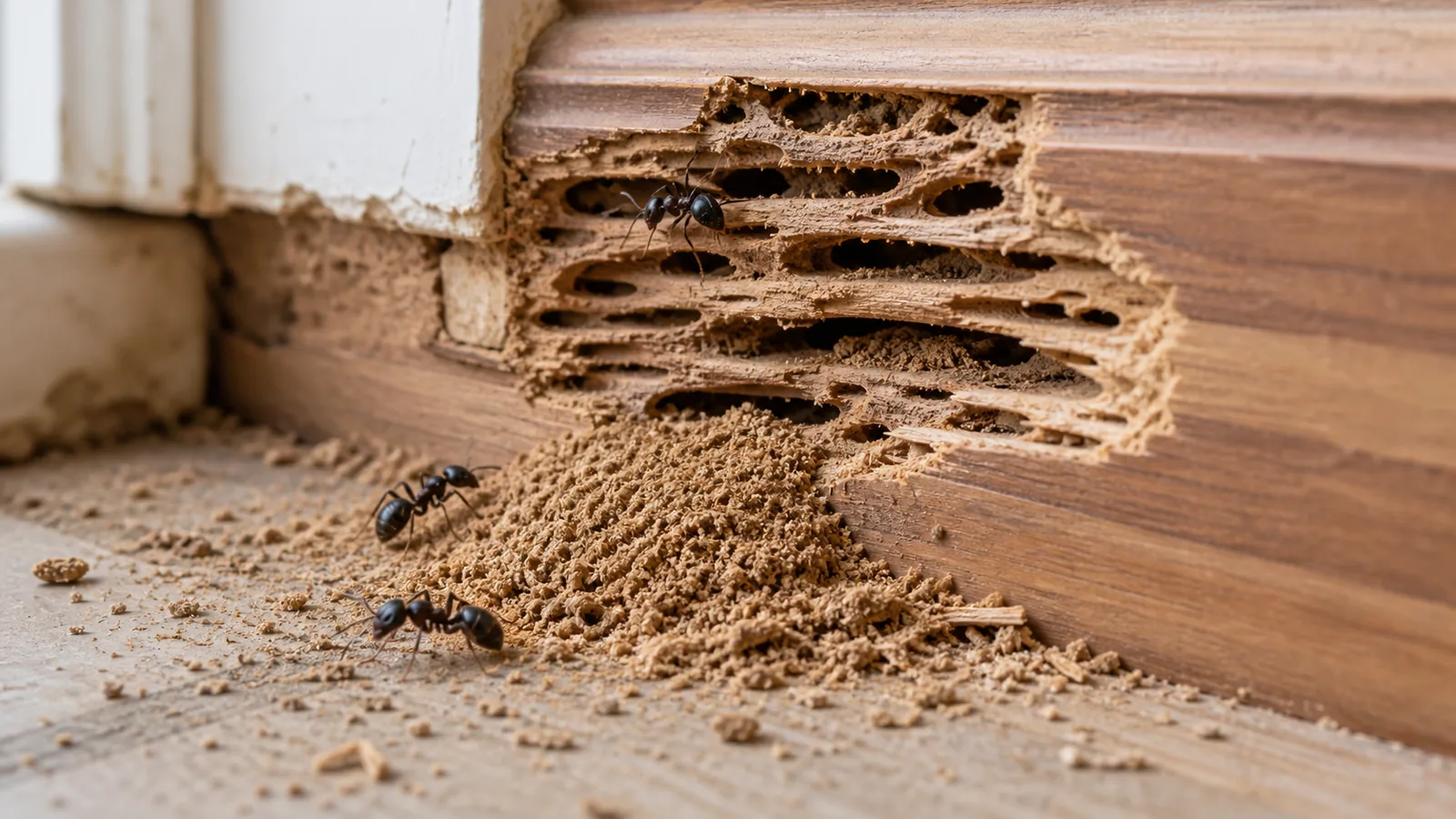
- Frass piles: little heaps of what looks like pencil shavings mixed with insect parts, pushed out of kick holes below the nest. This is the strongest single sign.
- Winged swarmers indoors in spring. A mating flight inside the house means a mature colony inside the structure. This one moves you from watch to act.
- Rustling in walls: on quiet nights, an active gallery can produce a faint crinkling, like cellophane.
- Consistent indoor trails, especially ants active indoors in late winter before anything is awake outside.
- A few ants in May or June only: likely foragers from an outdoor colony, worth monitoring, not panic.
Why spraying the trail backfires
Spraying visible ants with a repellent kills a handful of workers, and the colony, which may hold thousands, barely notices. Effective control means locating nests, treating them directly or with non-repellent products and baits the workers carry home, and addressing the parent colony outside when we can find it. Then the moisture defect gets fixed, or the wood softens again and a new colony takes the vacancy.
The honest caveat about damage
Carpenter ant damage accumulates over years, not weeks, so you rarely need to make a same-day emergency decision. But don’t let that comfort slide into neglect: a satellite colony in a rim joist quietly expands every season, and by the time frass appears, the galleries have been active for a while. Also know that ruling a house completely clear is hard; nests hide in voids we can’t open, which is why follow-up matters.
What we’d do at your house
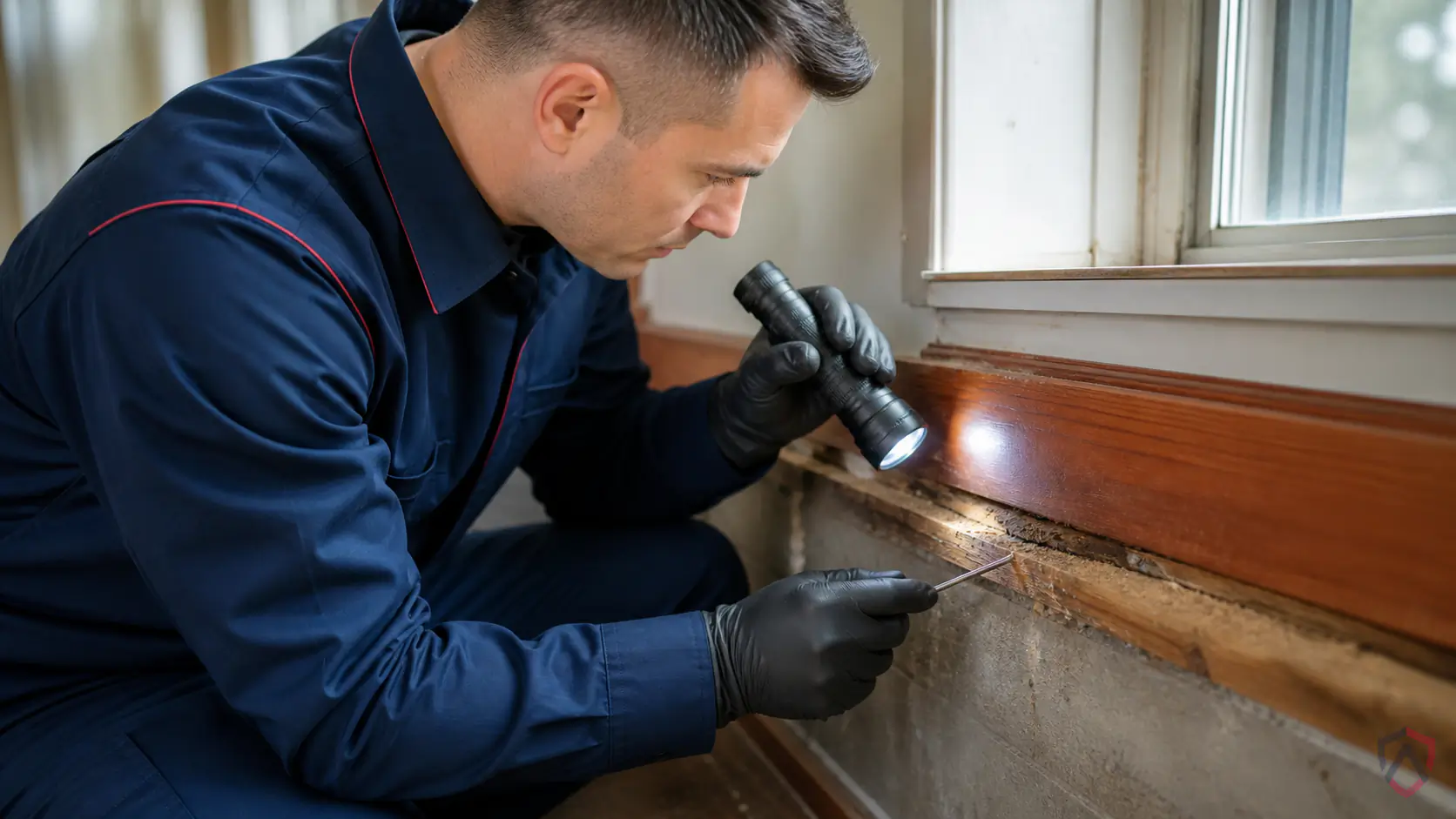
Inspect, confirm species, find frass and moisture readings, locate nests, treat, and give you a straight list of the water issues inviting them back.
Carpenter ant questions are exactly what our free inspections are for. Ankora serves the entire Twin Cities metro, call (651) 556-2666.
Seeing this pest around your home?
Ankora Pest Control offers a free inspection across the Twin Cities metro. We identify the problem, explain your options honestly, and only recommend what your home actually needs.