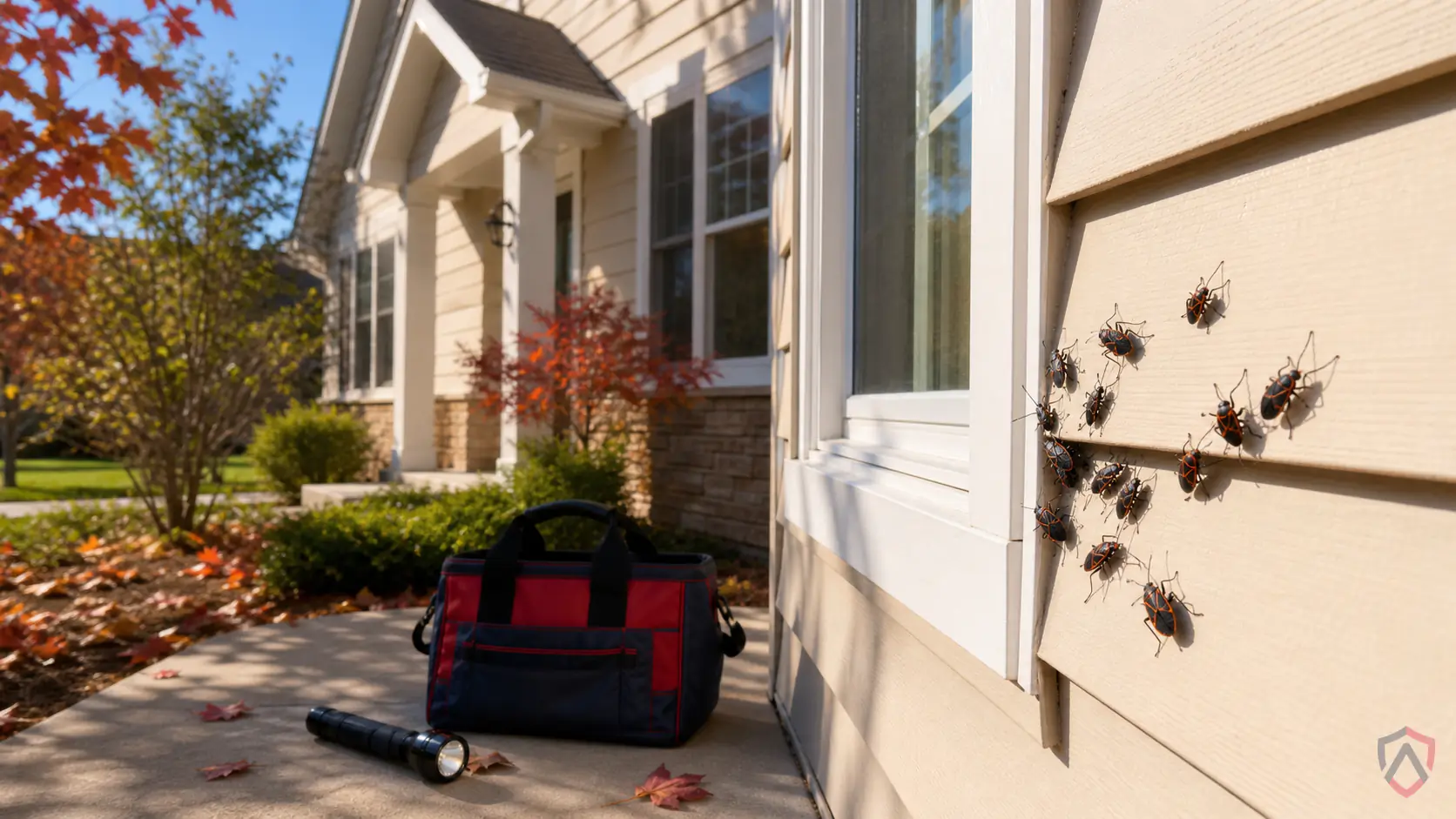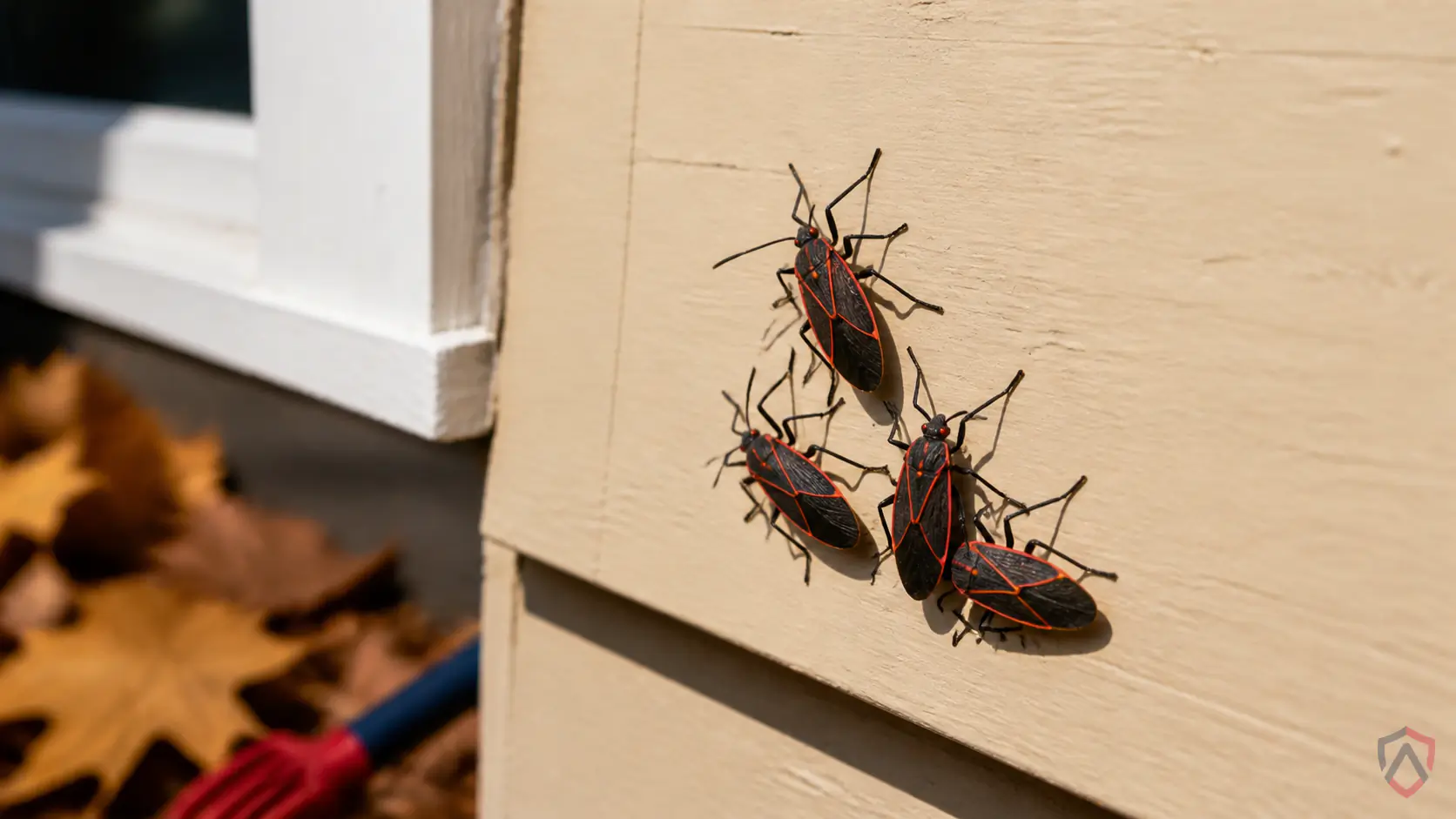
If your house is the one that gets blanketed in boxelder bugs every fall, you already know the pattern: warm September afternoon, south wall crawling, and then months of stragglers indoors. Prevention is absolutely possible, but the work happens earlier in the year than most people think, and some popular fixes aren’t worth the money. Here’s the honest playbook.
Know your enemy’s calendar
Boxelder bugs feed all summer on seeds of female boxelder trees, plus maples and ash, common across the metro from Minnetonka to Maplewood. When temperatures drop in late September, they fly to warm, sunny structures. Once they slip into wall voids, nothing practical reaches them until they emerge. So the prevention window is July through mid-September: sealing in summer, exterior treatment just before the flights.
Summer: the sealing checklist
- Caulk gaps around window and door frames, especially on south and west walls
- Seal where siding meets the foundation and where utility lines enter
- Repair torn window screens and screen attic and gable vents
- Check that weep holes are screened with proper weep covers, never caulked shut
- Replace worn door sweeps and garage door bottom seals
You won’t get every gap on a real house, and that’s fine. Every sealed opening cuts the numbers, and the same work blocks lady beetles, cluster flies, and mice.
Late August to mid-September: the treatment window
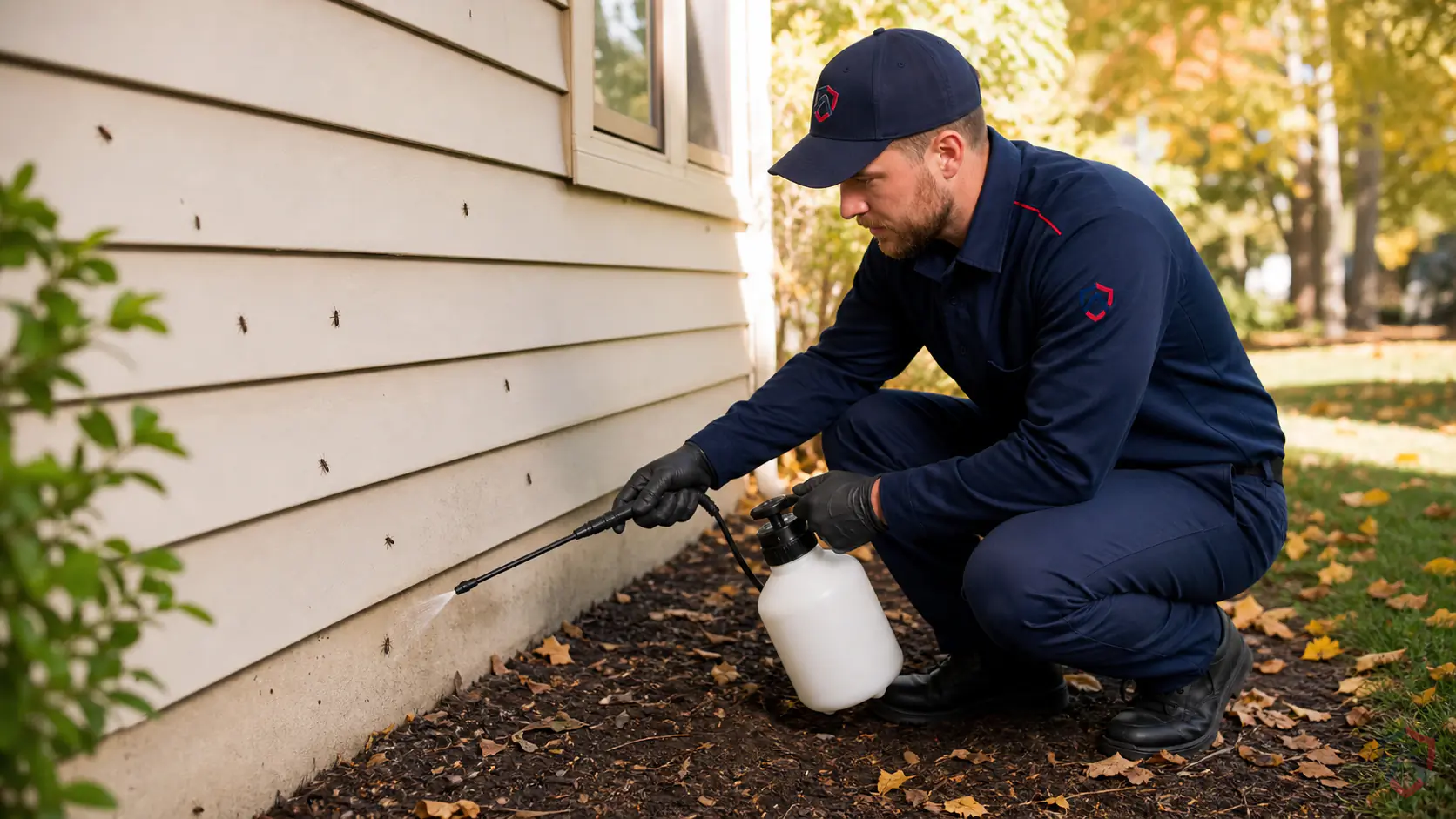
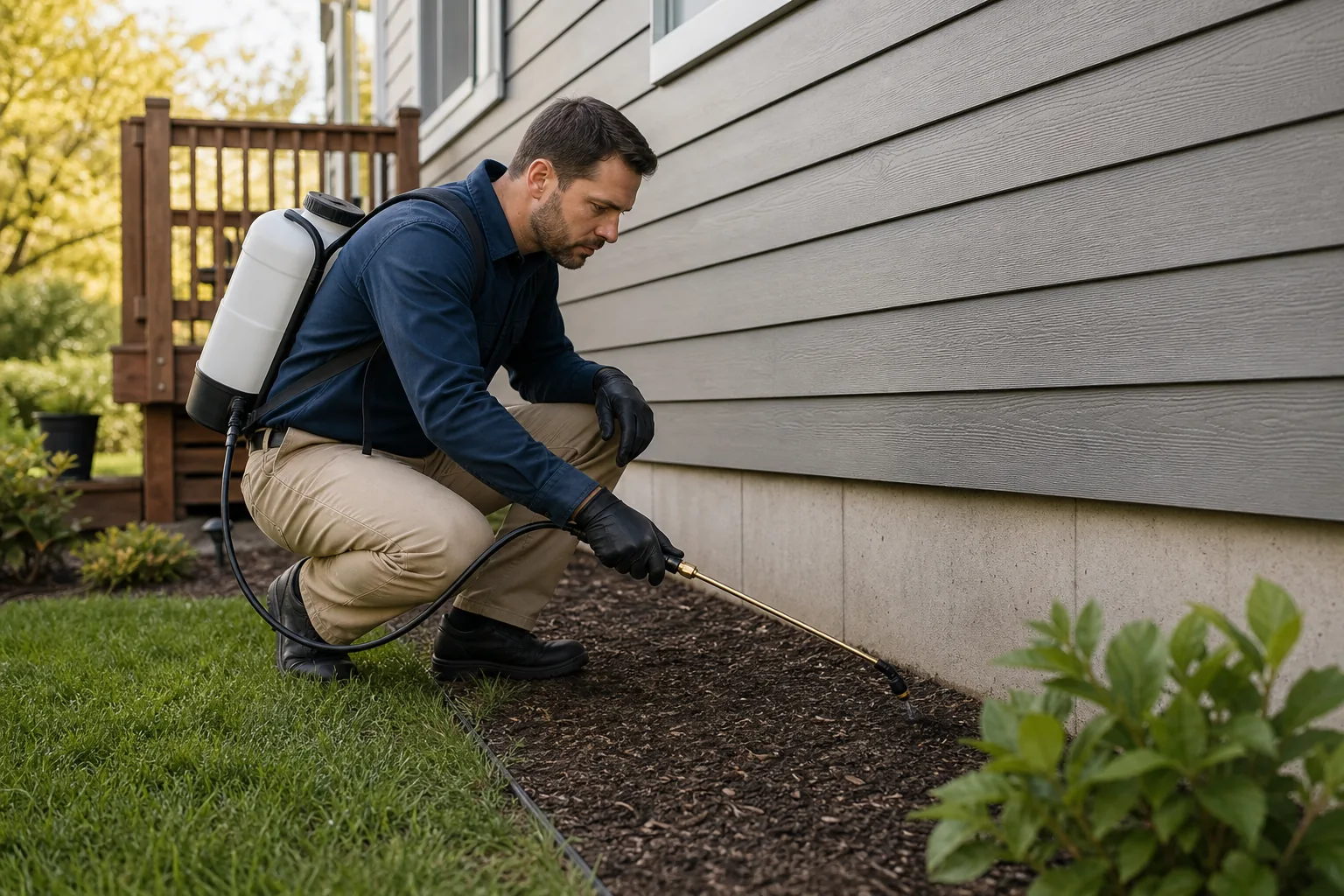
A residual exterior application on the sunny walls, rooflines, and entry points, timed before the mass flights, is the single highest-impact move for a chronically swarmed house. Timing is nearly everything: the same treatment in late October, after the bugs are inside, is close to worthless. If you only budget one professional visit a year for this issue, make it this one.
Should the boxelder tree come down
Here’s the caveat most companies soft-pedal: removing a female boxelder tree in your own yard helps somewhat if it’s the dominant local seed source, but these bugs fly blocks with no difficulty. If the neighborhood is full of boxelders and silver maples, removal buys less than people hope. Don’t take down a healthy shade tree on a pest-control promise alone; do it only if you have other reasons too.
Manage expectations, honestly
A sealed and well-timed treated house still sees some bugs on the siding in fall; they’re sunning, not entering, and that’s a win. Prevention success means the difference between thousands inside and a handful, not zero. Homes with big southern exposure near seed trees should plan on making this an annual routine, the same way you’d plan on raking.
Get on the fall schedule before the rush. Ankora treats boxelder-prone homes across the Twin Cities and the inspection that plans it costs nothing. Call (651) 556-2666.
Seeing this pest around your home?
Ankora Pest Control offers a free inspection across the Twin Cities metro. We identify the problem, explain your options honestly, and only recommend what your home actually needs.