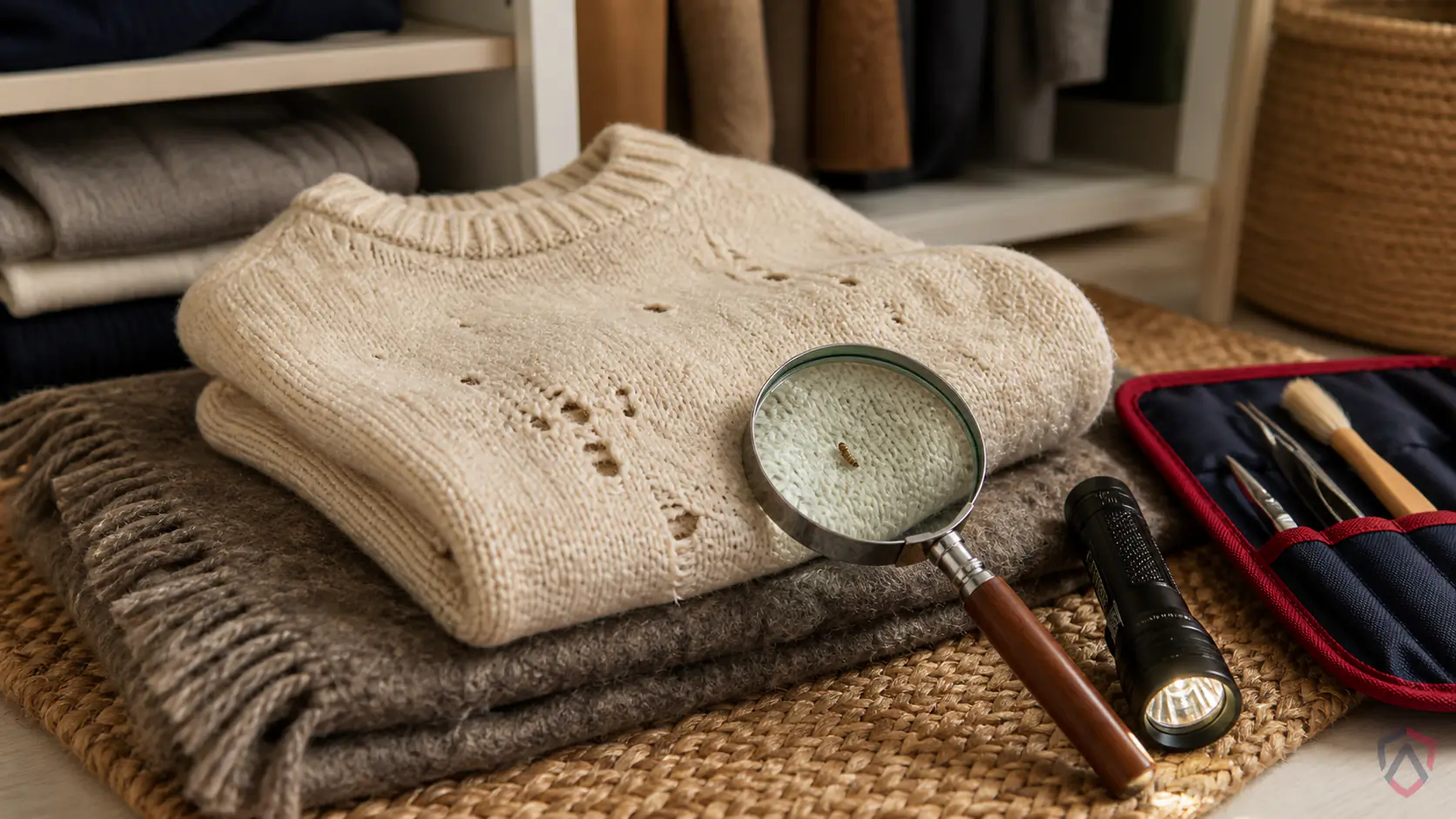
You pull a wool sweater out for the first cold week in November and find holes. Or a corner of the wool rug under the couch has gone threadbare. Most people blame moths, but in Twin Cities homes the more common culprit is the carpet beetle, and the difference changes where you look and what you do.
Meet the actual culprit: the larva
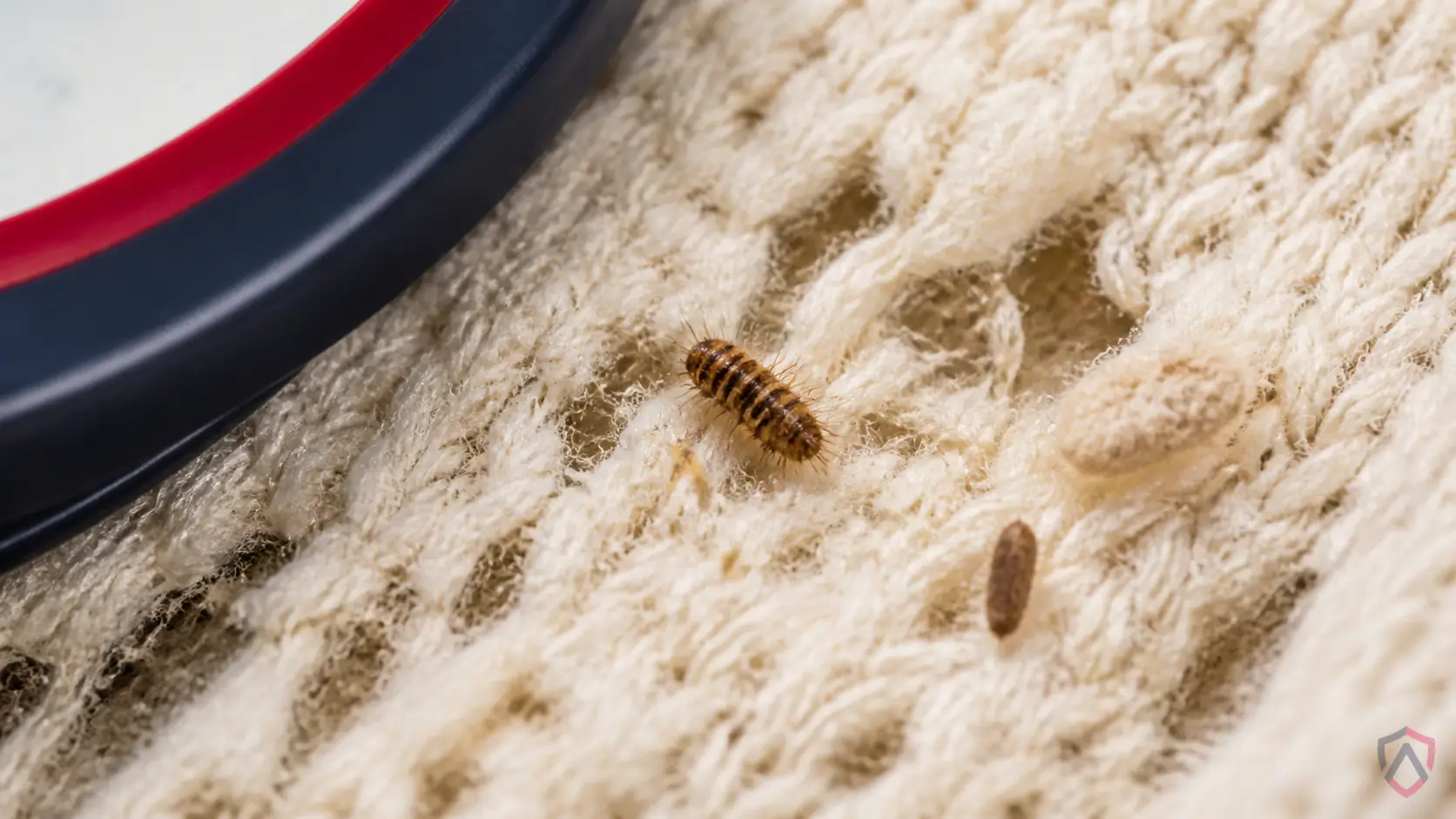
Adult carpet beetles are small, rounded, mottled or black, and harmless; they eat pollen and show up on windowsills in spring trying to get outside. The damage comes from the larvae, fuzzy, bristled, slow-moving grubs about a quarter inch long that digest keratin, the protein in wool, felt, fur, feathers, silk, and pet hair. They feed in the dark, undisturbed spots: under furniture that never moves, along baseboard edges of wool carpet, in the back of closets, inside blanket chests.
Beetles or clothes moths
- Carpet beetles: scattered irregular holes, shed bristly skins near the damage, no webbing. Damage often on one area of a rug or one side of a garment.
- Clothes moths: silken webbing or gritty tubes on the fabric, more uniform grazing.
Those shed larval skins are the diagnostic gold; they persist long after larvae move on and tell you exactly where feeding happened.
Finding the source is the whole game
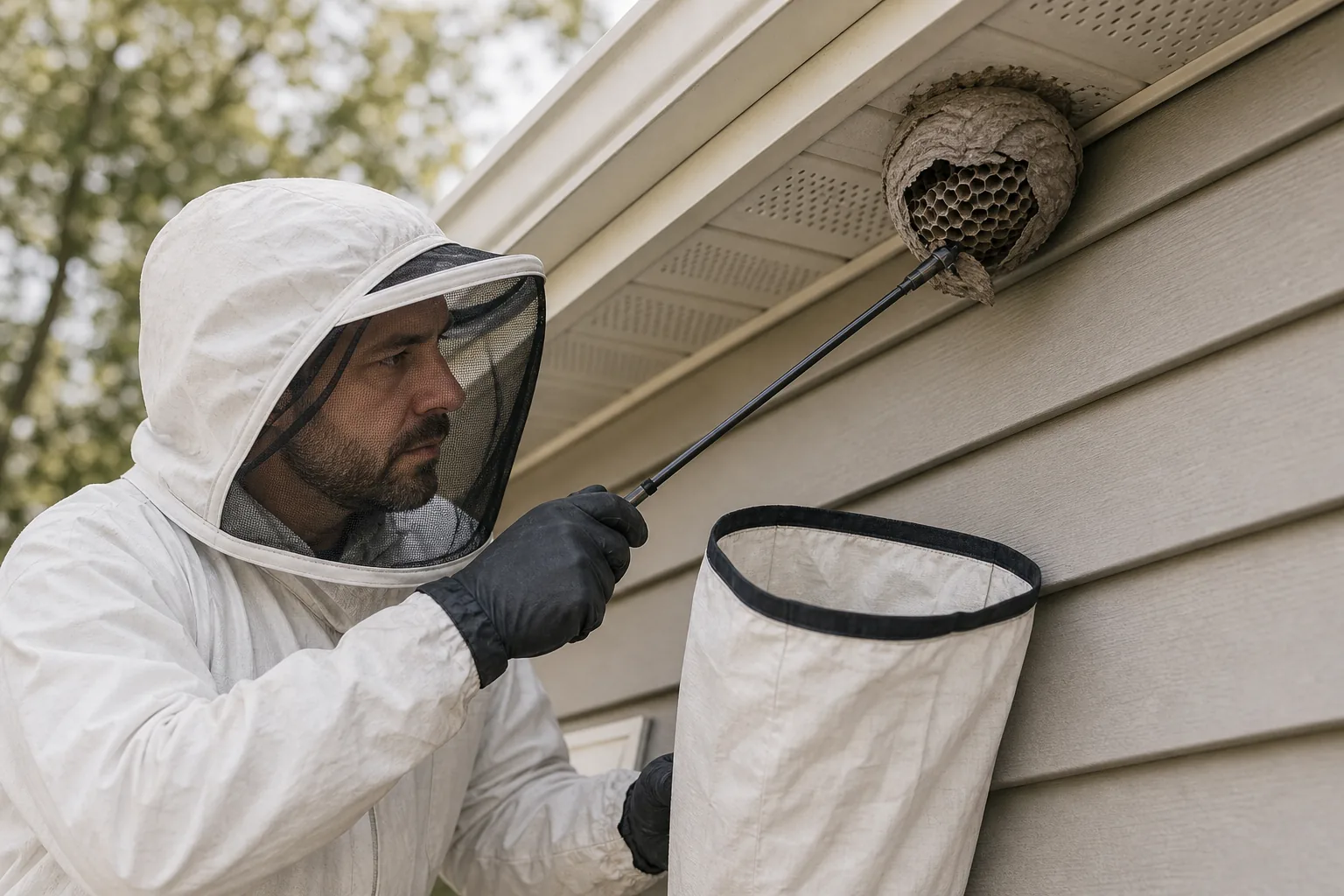
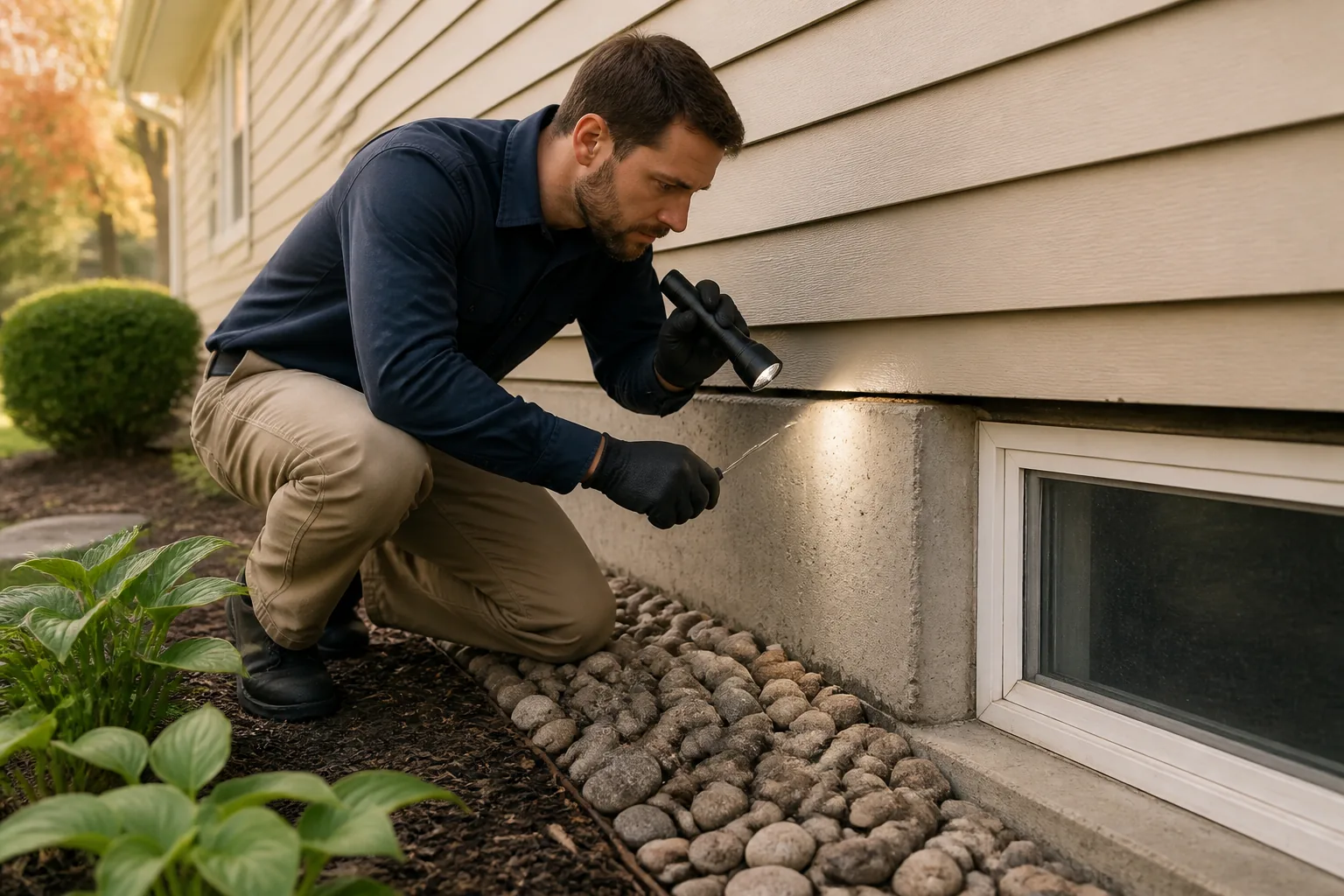
Here’s the honest part: treating a closet without finding the source population usually fails. Common sources we trace in metro homes include an old bird nest in a soffit or bathroom vent, an abandoned wasp nest in the attic, a mouse carcass in a wall from last winter’s rodent problem, accumulated pet hair inside cold air returns, a forgotten wool remnant in a storage bin, even a taxidermy mount. The larvae mature there and radiate outward. Expect some detective work, and expect that occasionally the source stays hidden and management continues longer than anyone would like.
The cleanup and treatment plan
- Vacuum thoroughly, especially carpet edges, under furniture, and along baseboards, and empty the vacuum outside
- Launder or dry-clean affected clothing; freezing items for a week also kills all stages
- Store off-season wool in sealed bins, cleaned first, since larvae favor items with body oils or food residue
- Targeted treatment of infested carpet edges, closets, and voids where we confirm activity
Prevention that sticks
Move furniture and vacuum under it a few times a year, screen bathroom and dryer vents against nesting birds, and deal with rodent issues promptly so there’s nothing in the walls to feed on later.
If wool is disappearing in your house, Ankora will run down the source. Free inspections everywhere in the Twin Cities metro, call (651) 556-2666.
Seeing this pest around your home?
Ankora Pest Control offers a free inspection across the Twin Cities metro. We identify the problem, explain your options honestly, and only recommend what your home actually needs.