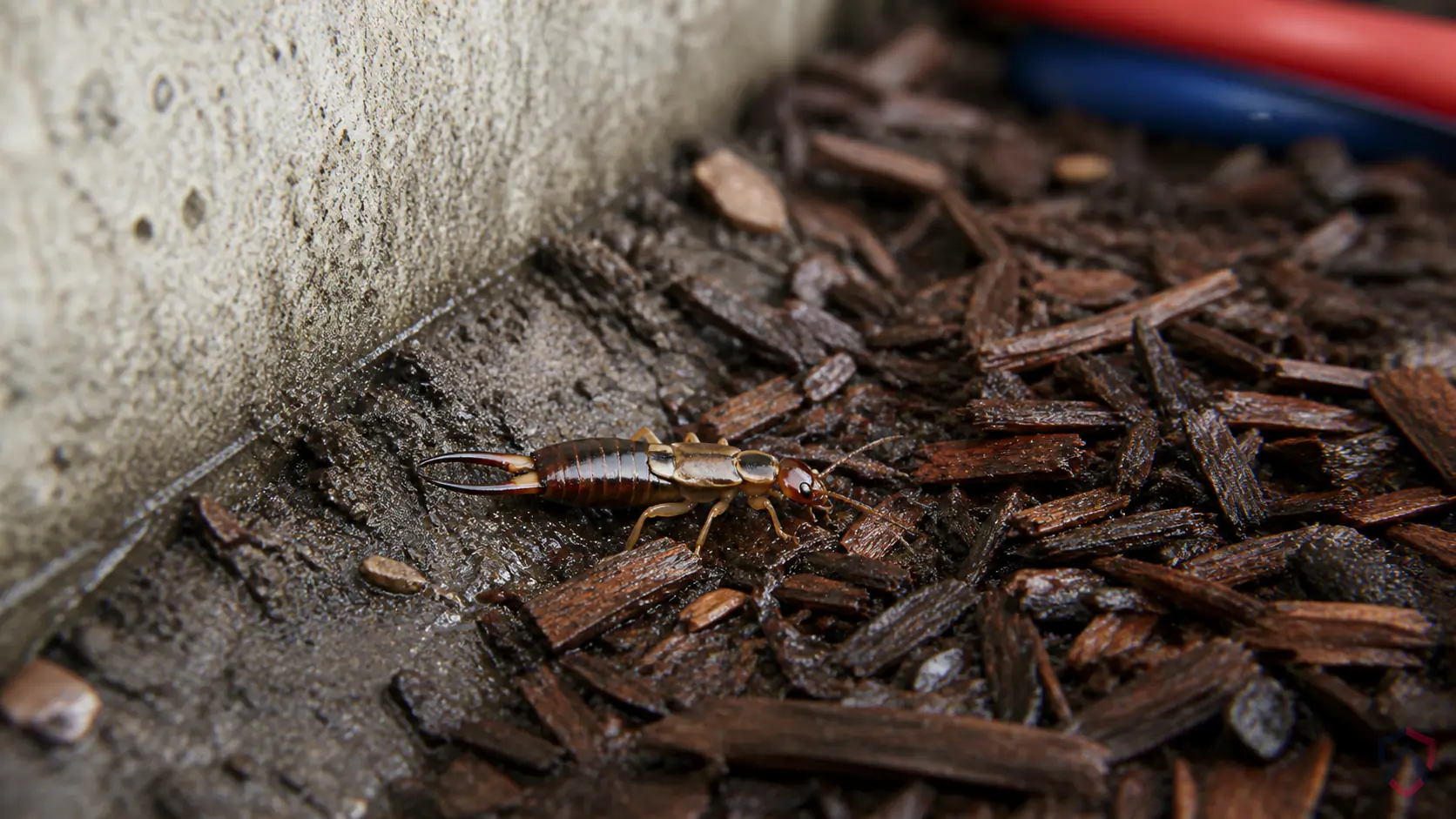
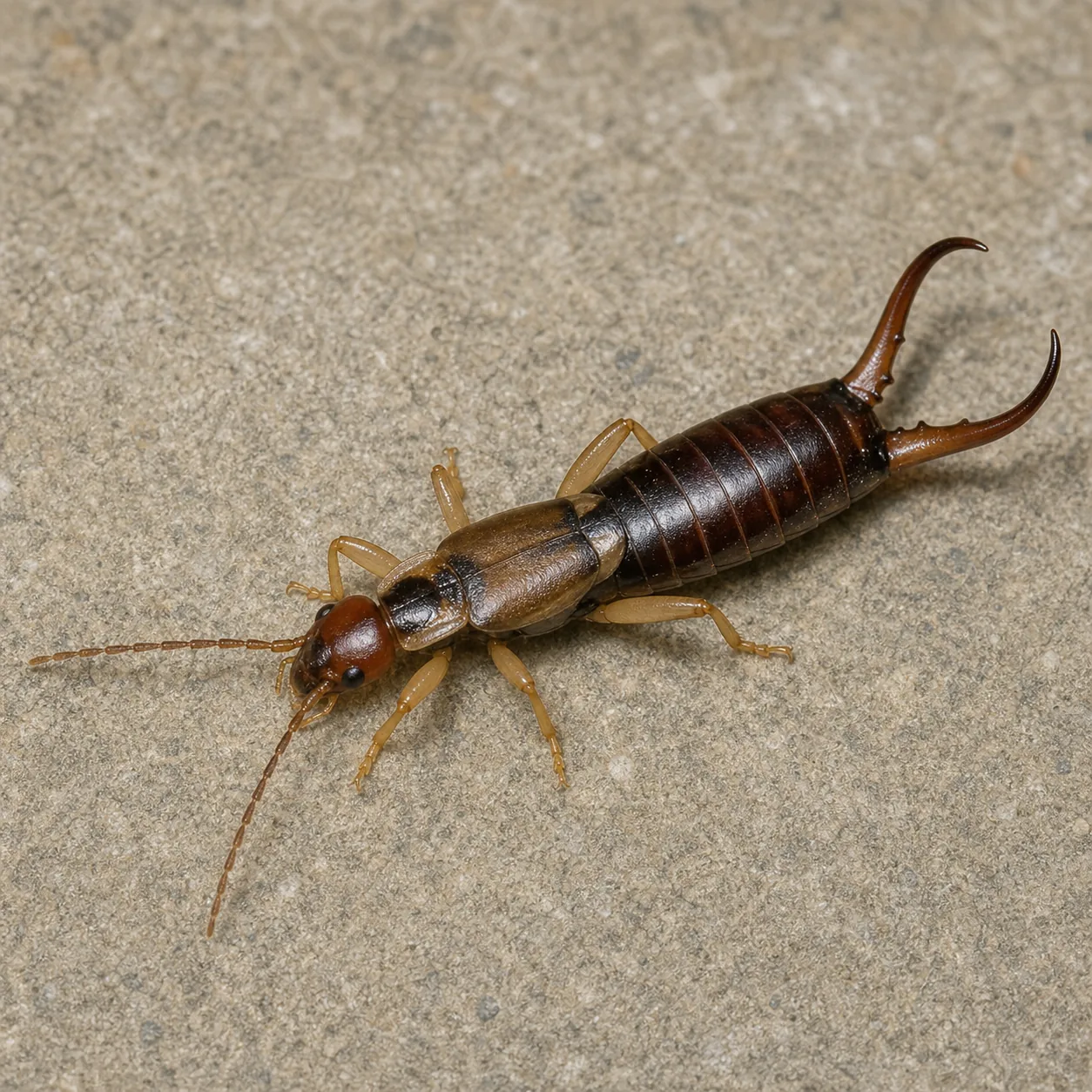
Flip over a stepping stone or peel back wet mulch in July and you’ll likely find earwigs, the brown insects with the rear pincers that look designed by a horror committee. Let’s clear the folklore first: they don’t crawl into ears any more than other bugs, and those pincers can deliver at most a weak pinch. No venom, no disease, no house damage.
What earwigs actually do
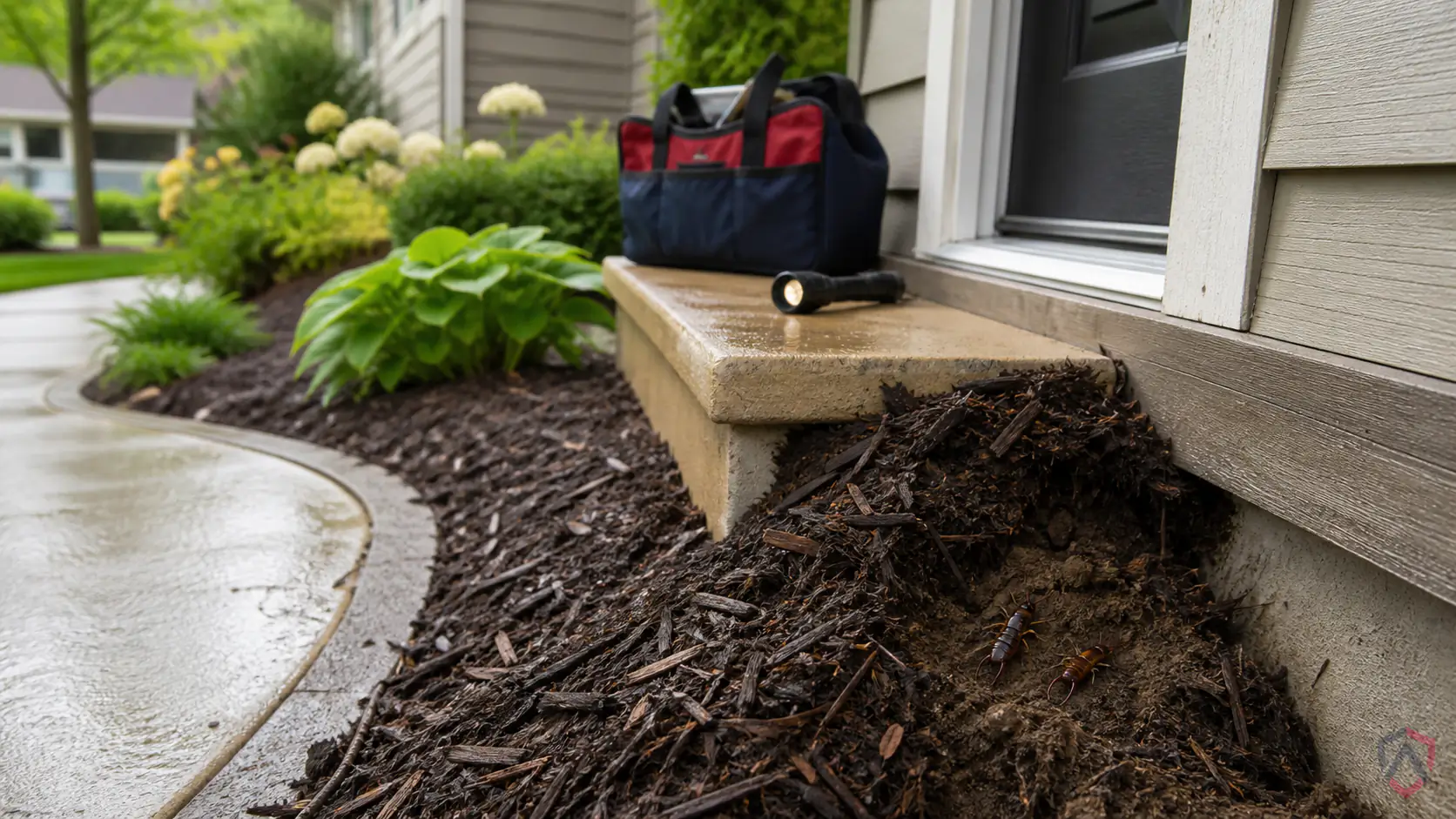
The European earwig is a scavenger and part-time predator. It eats decaying plant matter, aphids, and insect eggs, and it also chews ragged holes in hostas, dahlias, zinnias, and seedlings, which is where gardeners and earwigs fall out. They’re nocturnal and need daytime shelter that’s tight, dark, and damp. A deep mulch bed against a foundation in Edina or Maple Grove is basically purpose-built earwig housing.
Why they end up in the house
Earwigs come indoors by accident, usually in two weather patterns: heavy rain that floods their harborage, or a hot dry stretch that sends them hunting for moisture. They slip under doors and through foundation gaps, then show up in laundry rooms, bathrooms, and basements. Indoors they don’t breed or establish; a dry house is a dead end for them, which is why you mostly find them wandering or already dead.
Cutting the population outside
- Thin mulch to about two inches and pull it back from the foundation so a dry band of soil or rock sits against the wall.
- Water gardens in the morning, not the evening, so beds dry by nightfall.
- Remove board piles, leaf litter, and dense groundcover touching the house.
- Trap them: a rolled-up damp newspaper left in a bed overnight fills with earwigs by morning; shake it into soapy water. A shallow can with a half inch of vegetable oil and a splash of soy sauce works even better.
- Tighten door sweeps and caulk gaps at the foundation line.
Where treatment fits, and its limits
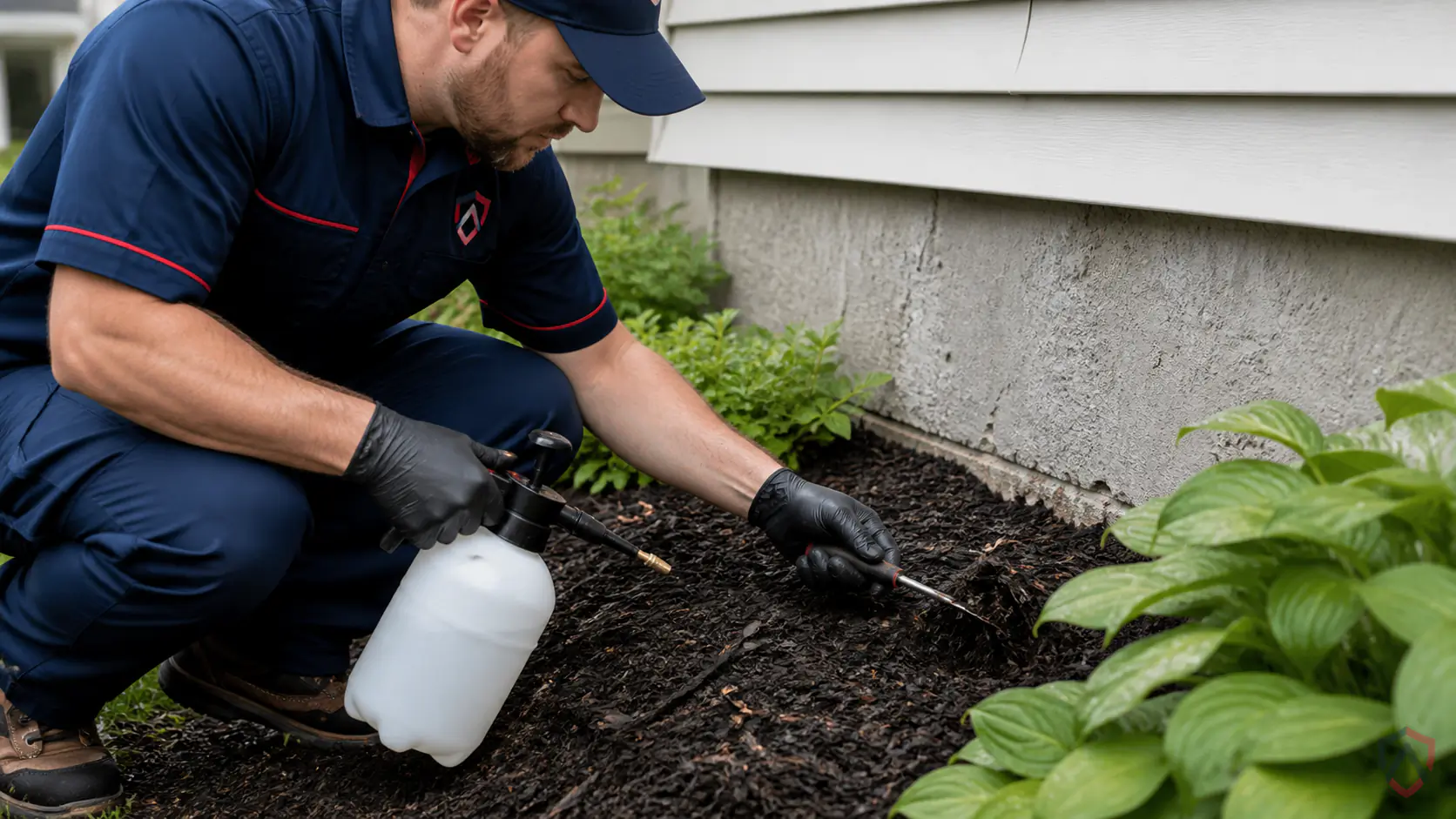
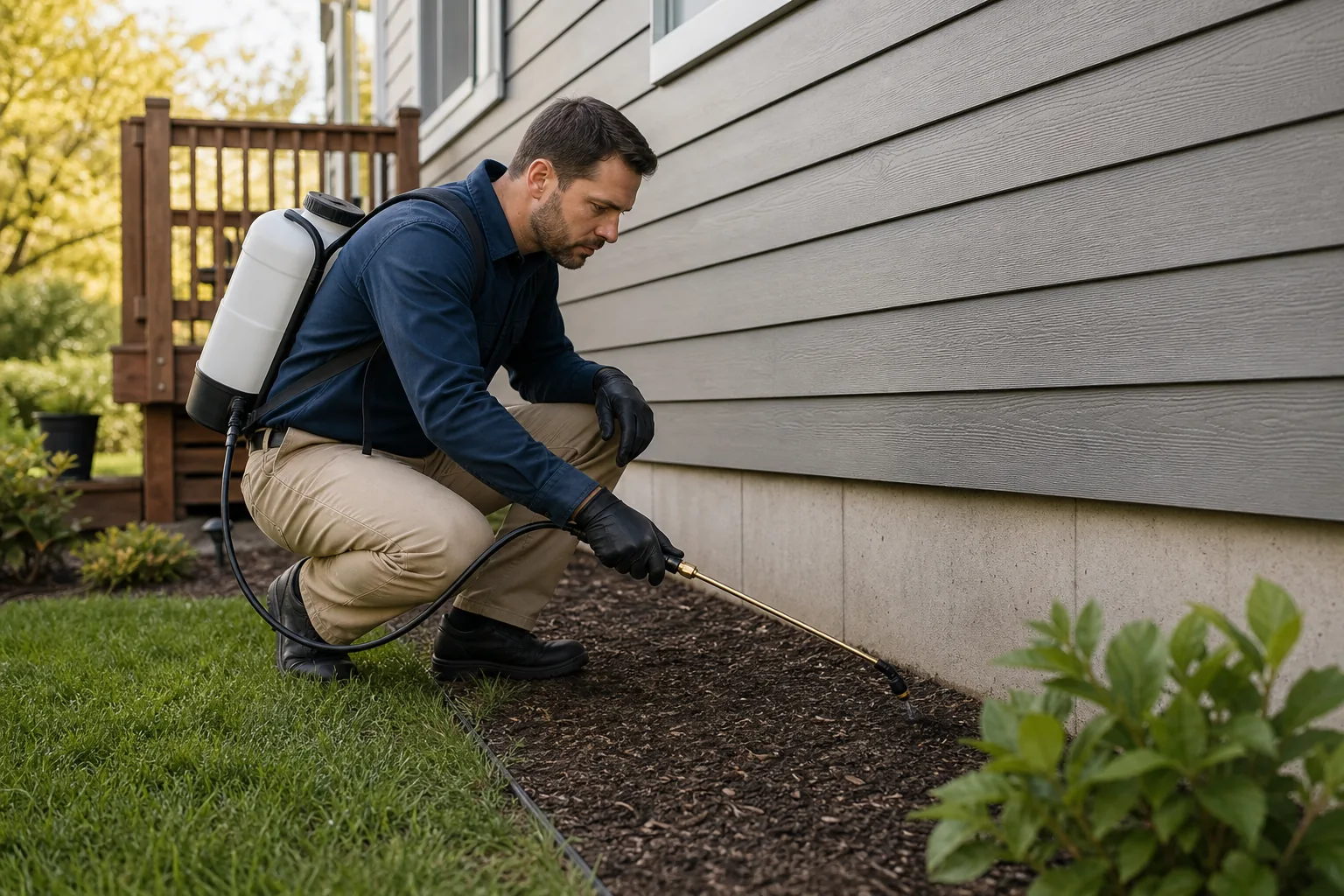
When numbers are heavy we treat the mulch line, foundation, and entry points, and it makes a real dent. The honest caveat: in a wet summer, earwig populations are a neighborhood phenomenon. Your beds connect to your neighbor’s beds, so think management, not eradication. A treated and de-cluttered perimeter keeps them out of the house and off your plants, which is the goal that actually matters.
A note for gardeners
If your main complaint is chewed plants, confirm the culprit before treating; slugs leave similar damage. Check at night with a flashlight. Earwigs will be right there in the act.
Seeing them inside regularly? That’s a gap somewhere we can find. Free inspections across the metro, call Ankora at (651) 556-2666.
Seeing this pest around your home?
Ankora Pest Control offers a free inspection across the Twin Cities metro. We identify the problem, explain your options honestly, and only recommend what your home actually needs.