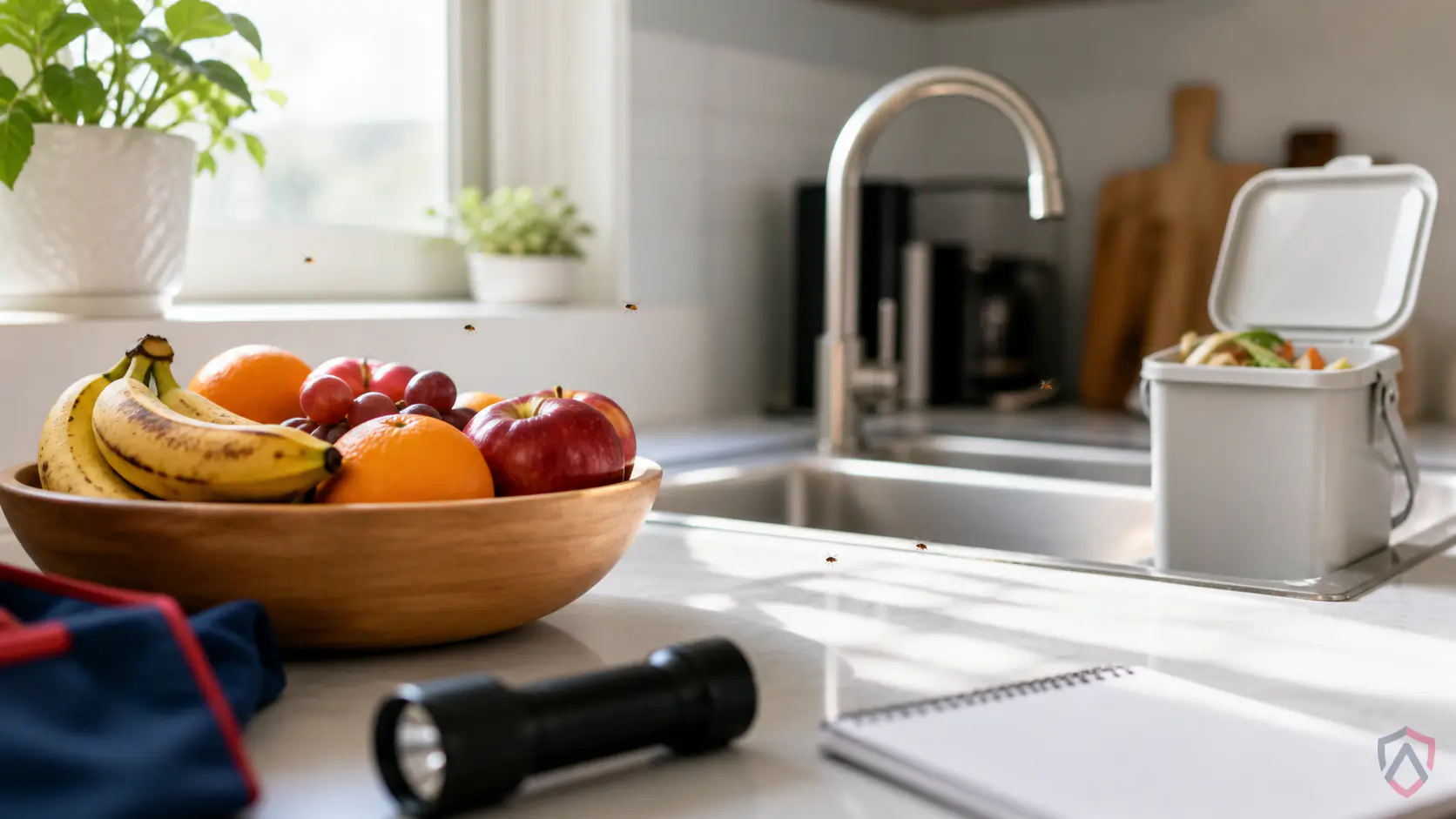

Late summer in Minnesota means garden tomatoes, farmers market hauls, and, in a lot of kitchens, a cloud of fruit flies that outlasts the produce that brought them. The vinegar trap you set is catching dozens and somehow the cloud never shrinks. That’s because traps address adults while the breeding site keeps shipping replacements.
The math you’re fighting
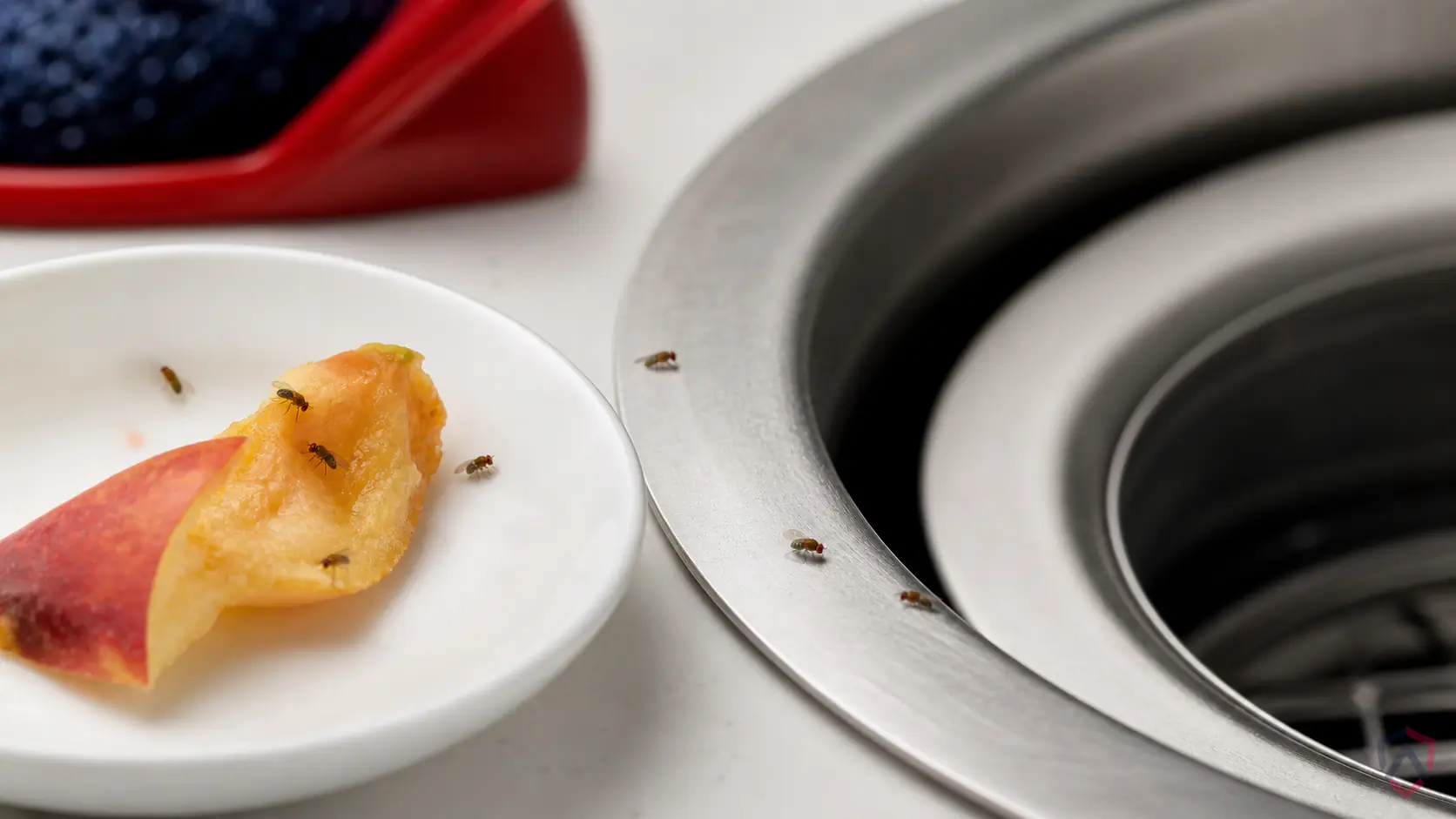
A fruit fly goes from egg to breeding adult in about eight days at room temperature, and a female lays around 500 eggs. All she needs is a film of fermenting organic material. Not a rotting fruit bowl necessarily; a residue is enough. This is why the problem persists after you’ve thrown out every banana in the house.
Where they actually breed
Run through this list before you buy another trap:
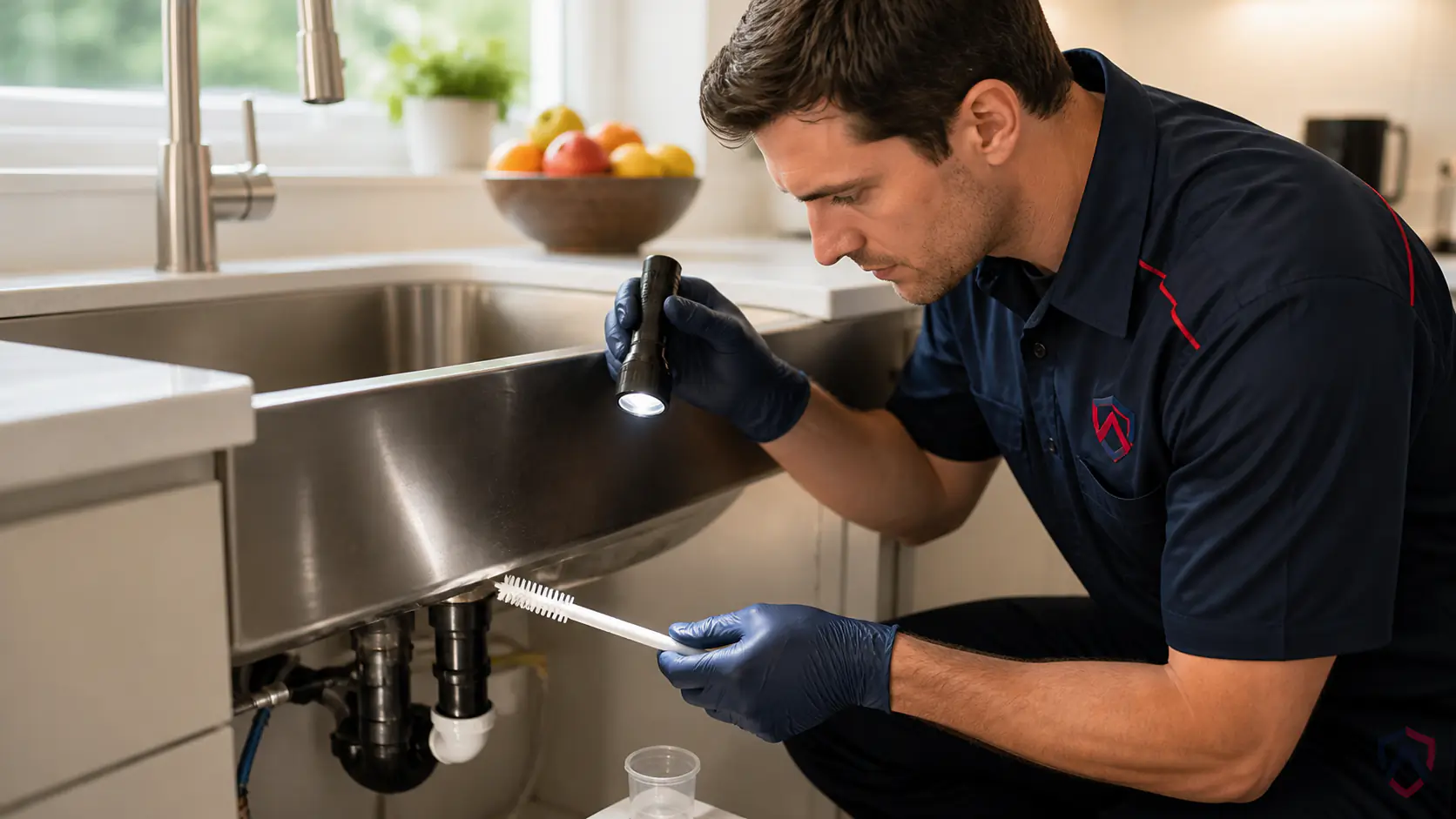
- Sink and garbage disposal: gunk under the splash guard and in the drain overflow is prime habitat. Scrub the guard’s underside; it’s usually vile.
- Recycling bin: dried pop, beer, and wine residue in cans and bottles.
- Under and behind the fridge: a rolled-away grape or a spill in the drip pan.
- The bag of potatoes or onions in the pantry with one liquefying at the bottom. This one solves a shocking number of cases.
- Compost pail, trash can bottoms, and the dishwasher door gasket.
- A forgotten sippy cup or the office kombucha.
Break the cycle in one week
Find and remove the breeding material, scrub the site, then run the traps to mop up adults. For drains, pour a foaming drain gel labeled for organic buildup, or scrub mechanically with a brush; boiling water alone is a temporary rinse. Take trash and recycling out daily during the purge week, refrigerate ripe fruit, and rinse containers before they go in the bin. Do all of it at once; the eight-day life cycle means a single missed site restarts the clock.
Honest caveat: make sure they’re fruit flies
Small flies get misdiagnosed constantly. Tan with red eyes hovering near produce: fruit flies. Fuzzy, moth-like flies parked on the bathroom wall: drain flies, which point to a biofilm in a drain or, worse, a broken pipe under the slab. Dark slender gnats around your potted plants: fungus gnats, a soil issue. The fixes don’t transfer, so ID first.
When it’s beyond the kitchen sponge
Persistent small-fly problems that survive a genuine deep clean sometimes trace to things like a slow leak under the dishwasher or a floor drain that’s lost its water seal. Restaurants deal with this constantly; homes get it too.
If the flies are winning after a full week of doing it right, let Ankora take a look. Free inspections across the Twin Cities, call (651) 556-2666.
Seeing this pest around your home?
Ankora Pest Control offers a free inspection across the Twin Cities metro. We identify the problem, explain your options honestly, and only recommend what your home actually needs.