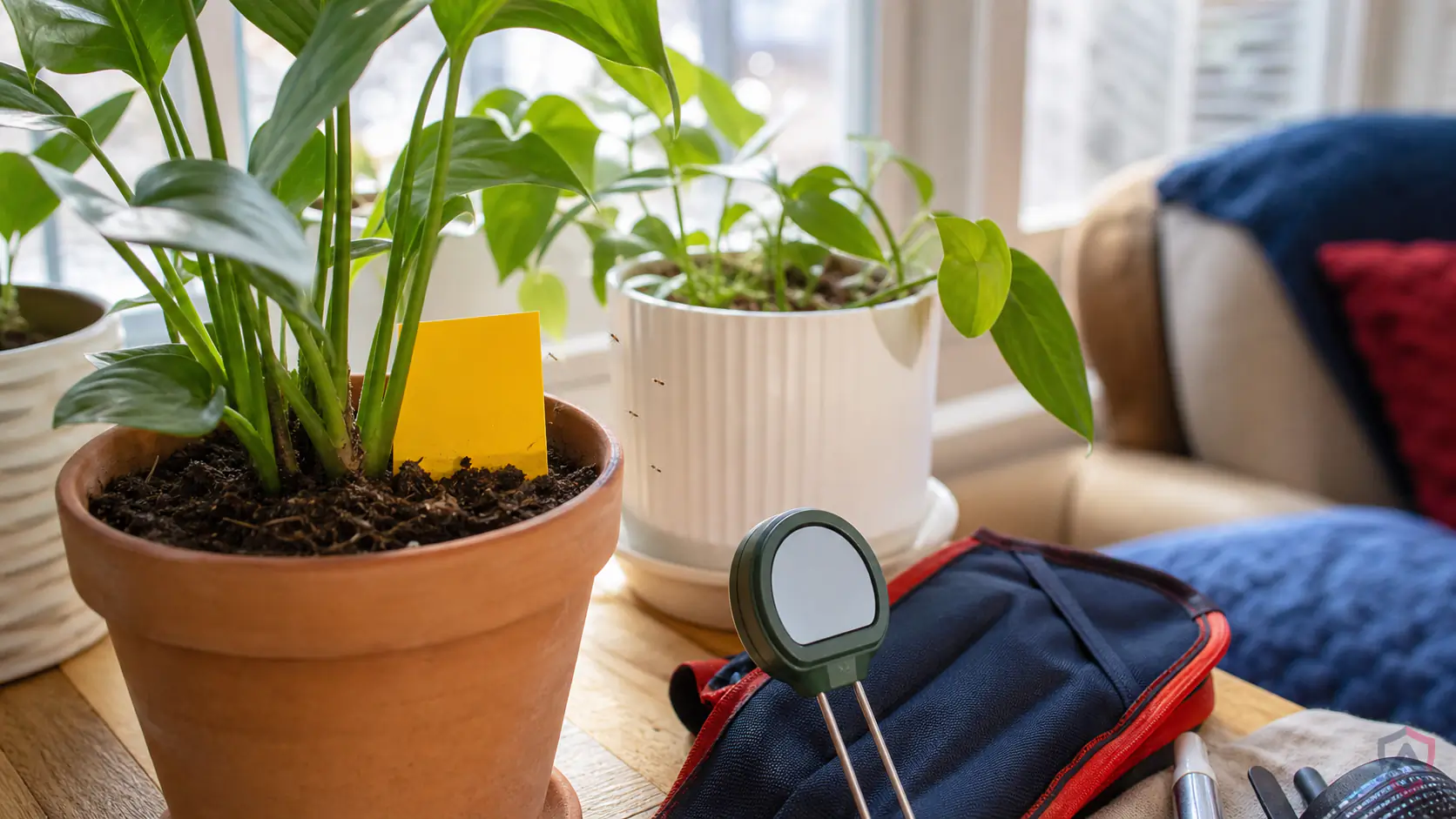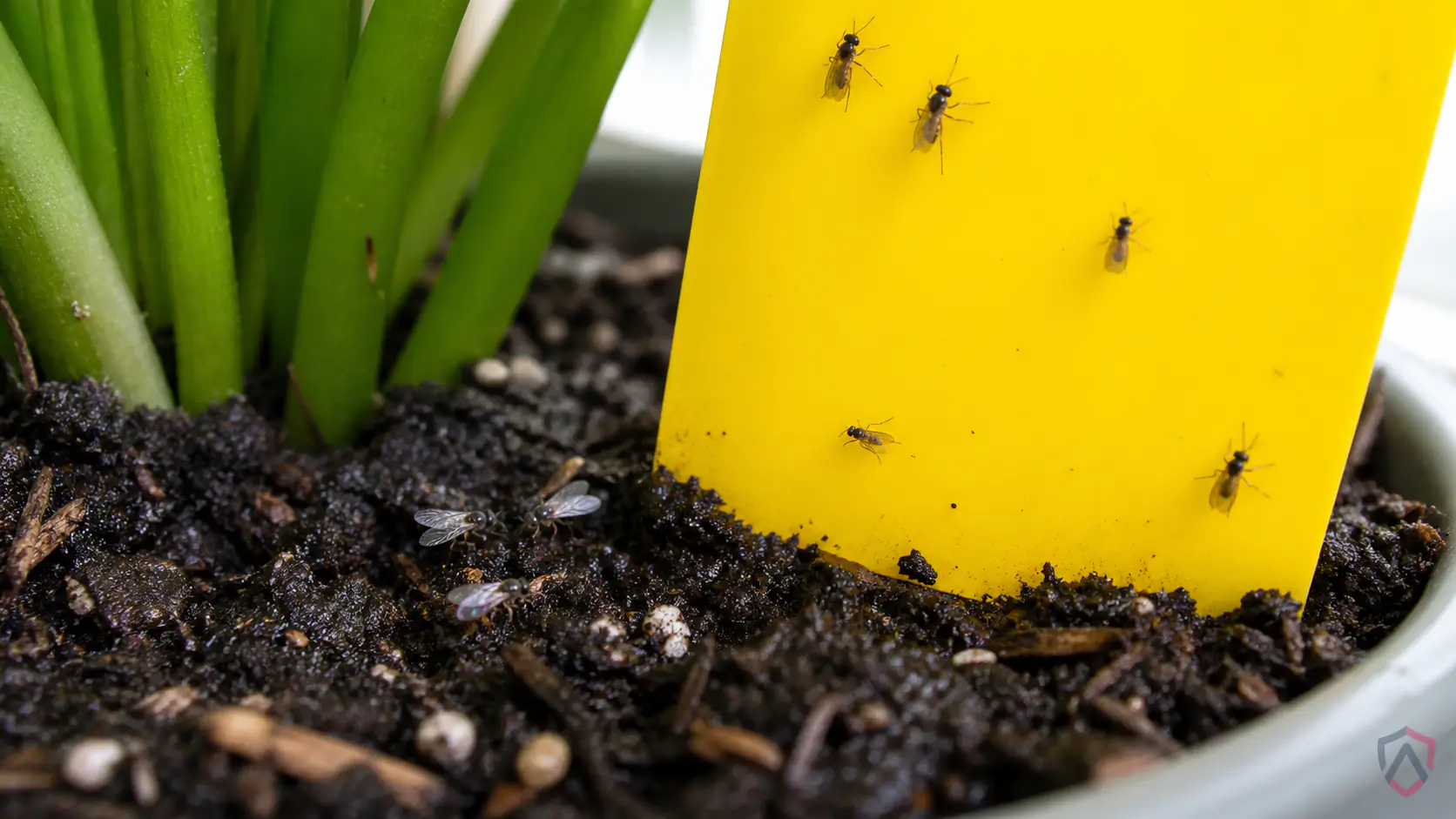

Minnesota winters turn a lot of us into indoor plant people, and indoor plant people eventually meet fungus gnats: tiny, dark, weak-flying insects drifting up from the pots, hovering near your face, and dying on the windowsill. They’re harmless to you and mostly harmless to mature plants, but they’re persistent for one simple reason. You keep watering their nursery.
Know your enemy
Adult fungus gnats live about a week and barely feed. The larvae live in the top inch or two of moist potting mix, eating fungi, algae, and decaying organic matter, and in heavy infestations they’ll also nibble fine roots, which is genuinely hard on seedlings and cuttings. The cycle takes roughly three weeks, so what looks like the same gnats forever is actually generations rolling over in your pots.
The fix starts with your watering habit
- Let the top dry out. Larvae need consistently damp surface soil. Letting the top two inches dry between waterings kills most of them without spending anything. Overwatering is fungus gnat farming.
- Water from the bottom for a while, so the surface stays dry while roots drink.
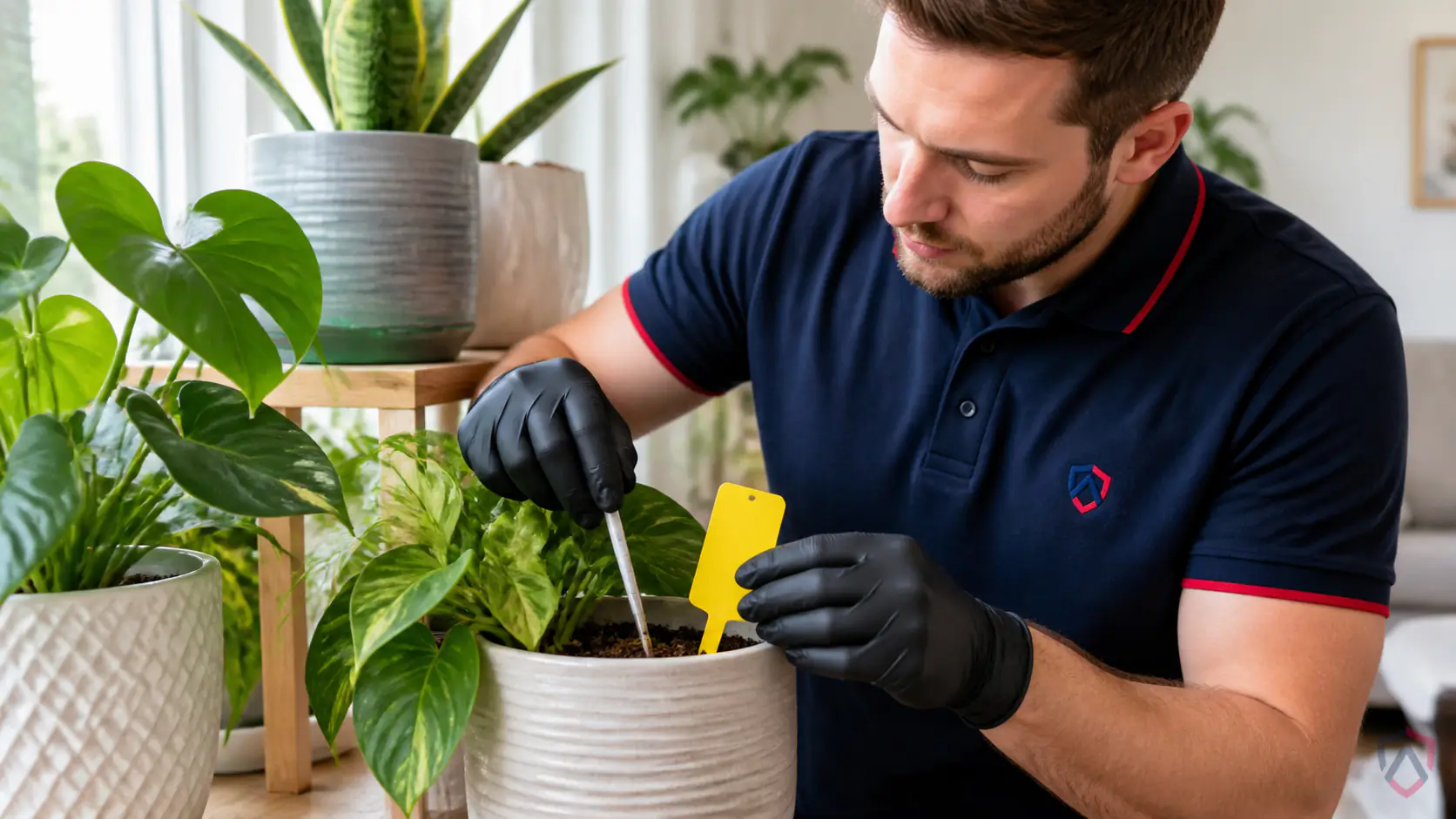
- Yellow sticky cards stuck in the pots catch adults and show you which plants are the factories.
- BTI (Bacillus thuringiensis israelensis), the same biological larvicide used in mosquito dunks, watered into the soil, kills larvae and won’t harm plants, kids, or pets.
- Repot chronic offenders, especially anything in old, broken-down mix, and use a container with drainage.
Why spraying the air accomplishes nothing
Knocking down the visible adults with a spray feels productive and changes nothing, because the next generation is already in the soil. This is the same principle as most pest work: treat the source, not the symptom. Also check the saucer under each pot; standing water grows the algae film larvae love.
The honest caveats
Two of them. First, some bagged potting soils come with fungus gnats already in them, so a brand-new bag can restart a problem you just solved; store opened bags sealed and dry. Second, if tiny flies persist with no houseplants in the home, you’re likely dealing with drain flies or fruit flies instead, or in rare cases moisture in a wall or under a slab feeding fungus growth. That last one is worth finding, since the gnats are the cheap warning and the water damage is the expensive part.
Plants and pest control can coexist
You don’t have to toss your plants. Between watering discipline, sticky cards, and BTI, nearly every houseplant gnat problem resolves in three to four weeks.
If small flies are persisting and the plants check out clean, something else is feeding them. Ankora inspects for free throughout the Twin Cities metro, call (651) 556-2666.
Seeing this pest around your home?
Ankora Pest Control offers a free inspection across the Twin Cities metro. We identify the problem, explain your options honestly, and only recommend what your home actually needs.