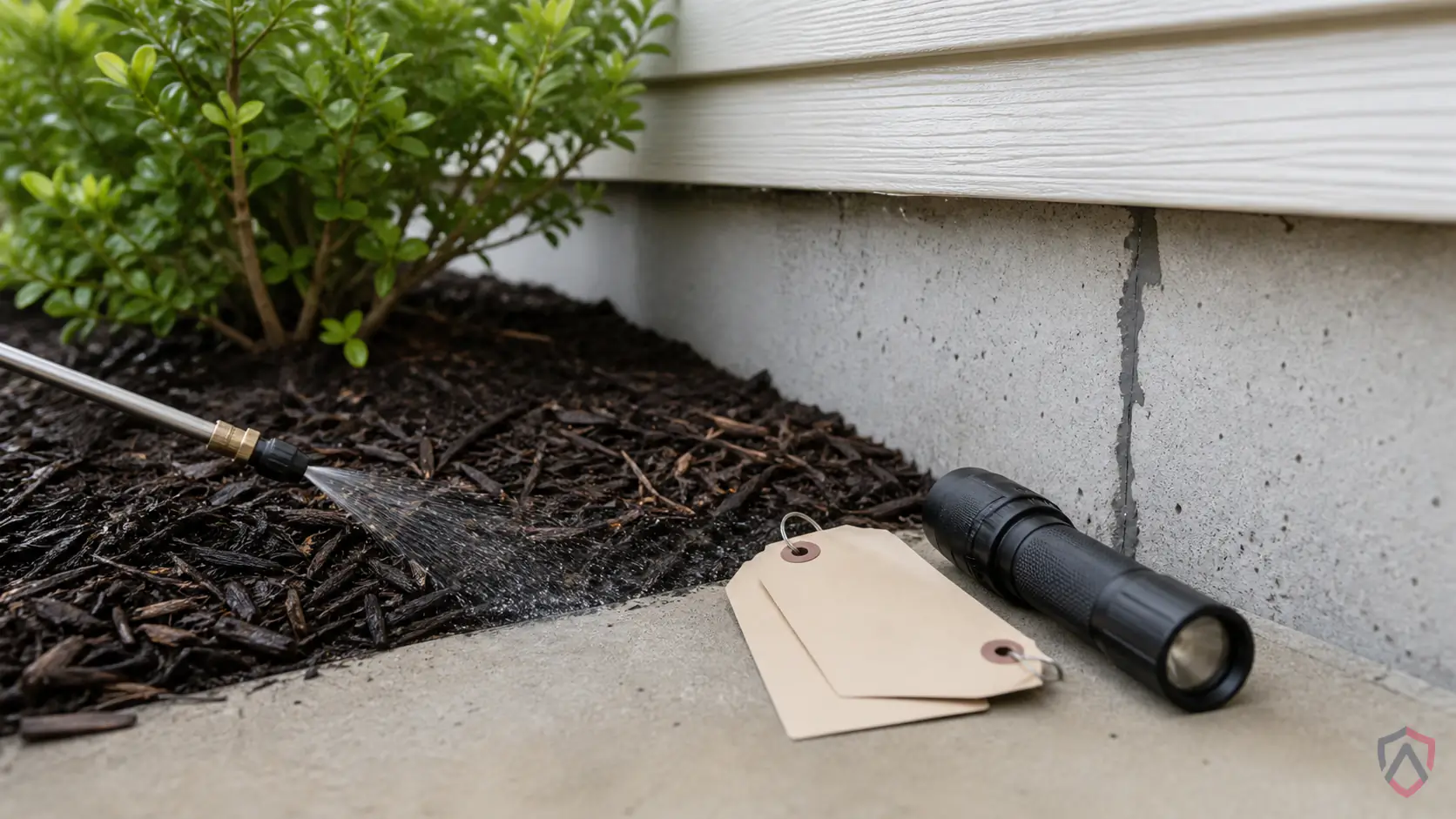

How often should a Twin Cities home get pest control? The industry’s default answer is quarterly, forever, and we’d rather give you the real answer: it depends on your house, your tolerance, and your pest history, and some homes don’t need a recurring plan at all. Here’s how we’d walk through it with you.
What Minnesota’s calendar does to pests
Our climate concentrates pest pressure into pulses. Ants and wasps ramp from April through September. Mosquitoes and ticks own the summer. Then fall flips the script: mice, boxelder bugs, lady beetles, and spiders all push indoors ahead of the freeze. Winter itself is quiet outside but is exactly when interior rodent problems mature. A sensible service calendar tracks those pulses instead of treating February like July.
Who fits which schedule
- One-time treatment: right for a single, defined problem, a wasp nest, a yellow jacket wall colony, one-off ant trail. Fix it, verify, done.
- Seasonal or quarterly plan: earns its cost for homes with recurring history: carpenter ants every spring, fall mouse entries, heavy boxelder pressure on a sunny house near mature maples, wooded lots in places like North Oaks or the river bluffs. The spring visit heads off ants and wasps, summer covers stingers and perimeter pests, fall is the big one for exclusion and overwintering insects, winter checks interior rodent activity.
- Monthly: mostly a commercial cadence, restaurants, warehouses, multifamily. A single-family home rarely needs it outside of an active German roach or heavy rodent program with follow-ups.
The honest part most companies skip
A newer, tightly sealed house on an open lot with no pest history doesn’t need a quarterly contract, and anyone selling you one is selling. What that homeowner needs is a good fall exclusion once, and a phone number for when something changes. On the flip side, people consistently underestimate recurring pressure: if you’ve paid for three separate one-time ant jobs in two years, a seasonal plan is cheaper and works better because the timing gets ahead of the colonies instead of chasing them.
Why timing beats frequency
Four well-timed visits outperform six poorly timed ones. Exterior boxelder treatment pays in early September, not November. Ant baiting works best in spring when colonies are hungry and small. Mouse exclusion belongs in October, before the freeze drives the rush. When you evaluate any plan, ask what happens at each visit and why then; a good company has an answer that references your actual house. Ankora’s covered pests also carry a re-treat guarantee, so if something covered comes back between visits, the return trip doesn’t cost you anything.
Not sure which bucket your home falls in? That’s what the free inspection settles, no obligation attached. Call Ankora at (651) 556-2666.
Seeing this pest around your home?
Ankora Pest Control offers a free inspection across the Twin Cities metro. We identify the problem, explain your options honestly, and only recommend what your home actually needs.