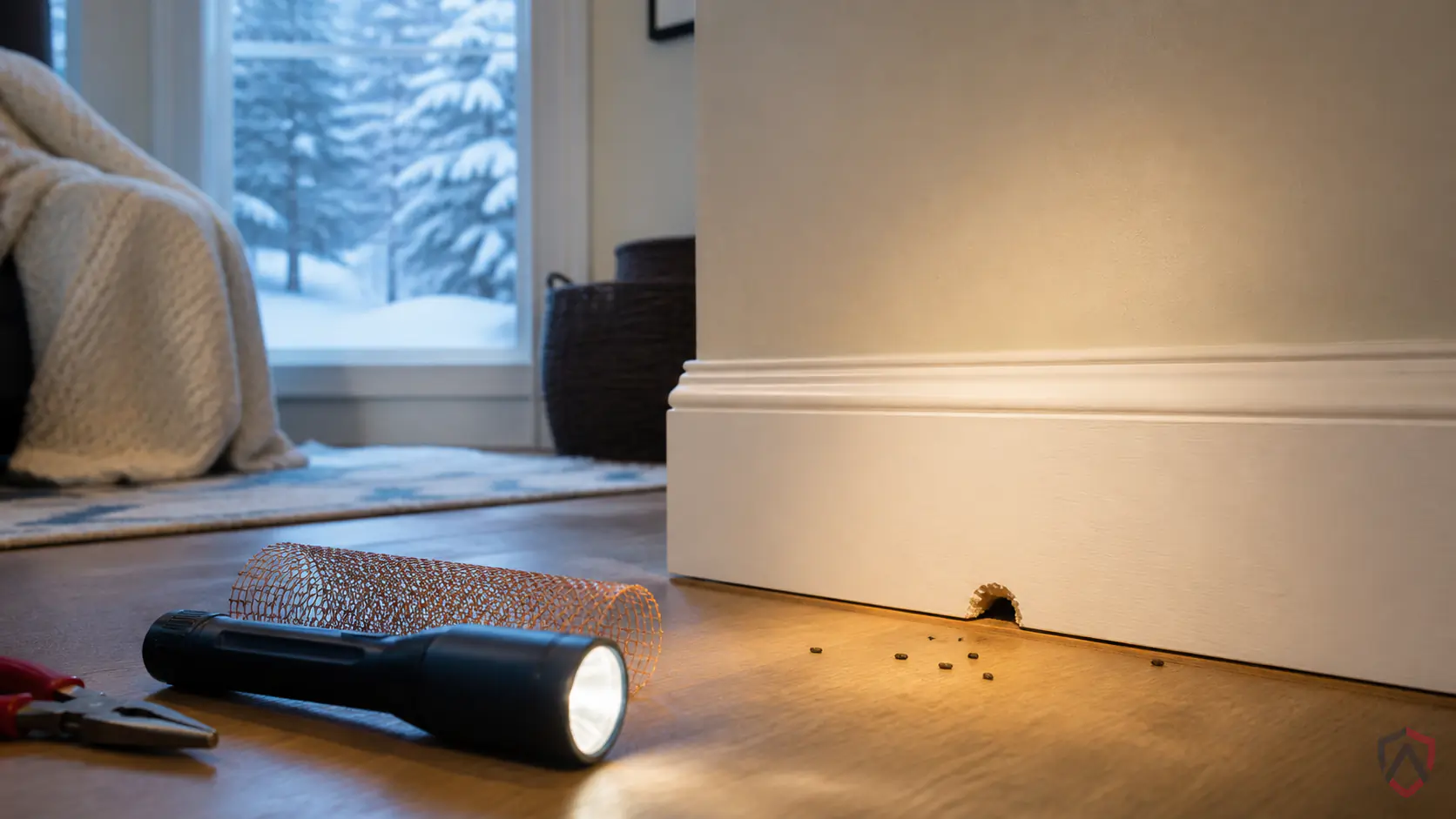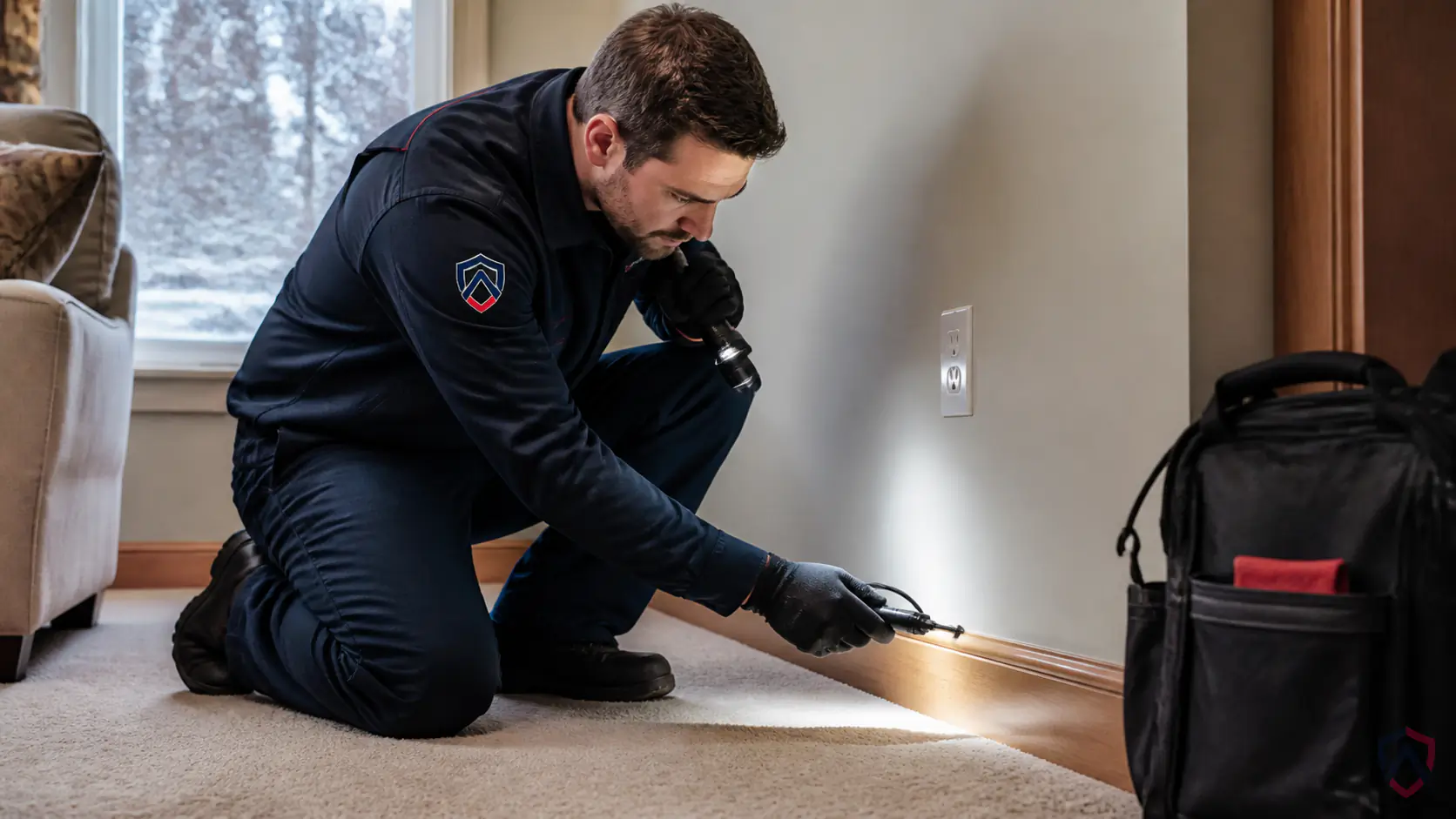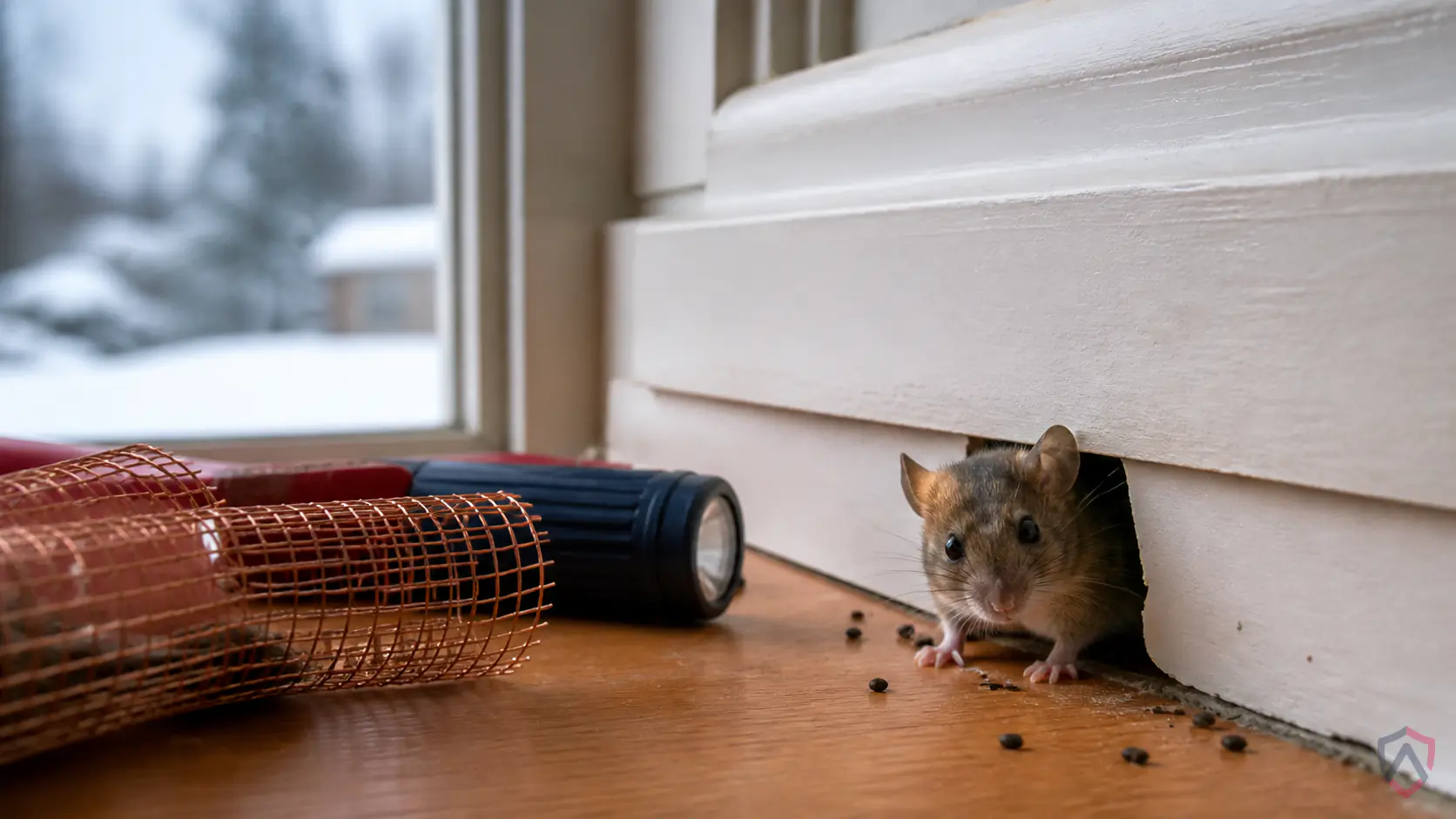
It’s a January night in Minnesota, the furnace cycles off, the house goes quiet, and there it is: a light scratching inside the wall behind the headboard. Sound in a wall in winter almost always traces back to a fall entry, because whatever is in there moved in when the weather turned and has been commuting quietly ever since.
Mouse, squirrel, or something else
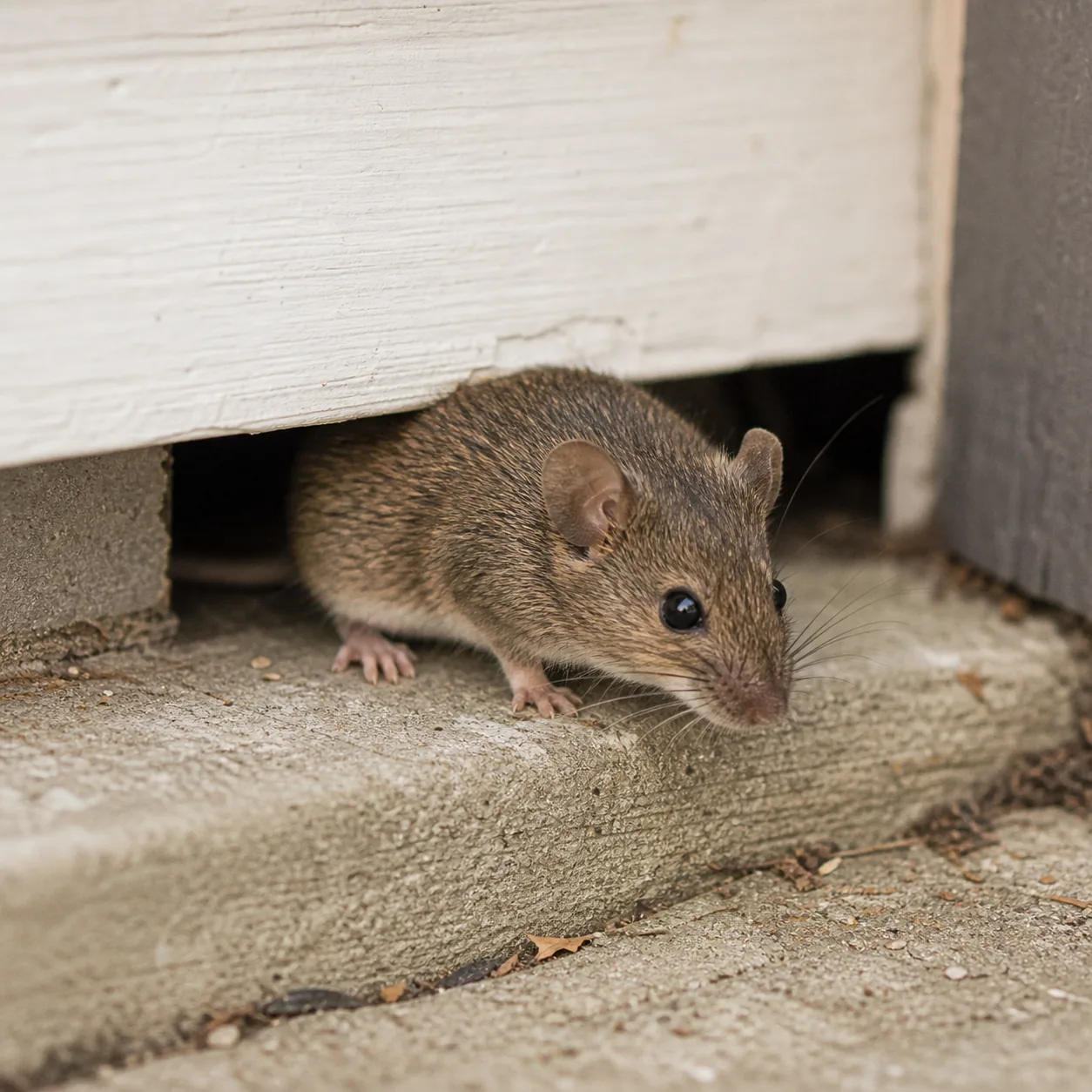
The sound itself narrows it down. Light scratching, gnawing, or skittering after dark, often near the kitchen or a heat source, points to mice; they’re nocturnal and small, and the sound is delicate. Heavier scrambling or rolling sounds concentrated around dawn and dusk, usually in the attic or ceiling, points to gray squirrels denning for winter. Fluttering or high-pitched squeaking near a chimney or gable can be bats, which in winter means a hibernating colony and a very different, more regulated response. Getting this ID right matters because mouse tactics do nothing for squirrels, and bat work is seasonal by law to protect maternity colonies.
Confirming mice without opening the wall
- Check the usual evidence rooms: droppings under the sink, in the stove and dishwasher toe-kick area, along garage walls, around the water heater
- Dust a light band of flour on suspected runways and check for footprints in the morning
- Set snap traps perpendicular to walls in the basement, garage, and utility room, baited with peanut butter; mice in walls travel to food, and traps on their routes intercept them
Why winter trapping works in your favor
Here’s the one bright side: cold concentrates the population indoors and shrinks their food options. A focused trapping effort in January, a dozen or more traps placed along walls and checked daily, usually shows results within the first two or three nights. If traps go untouched for a week while sounds continue, the activity may be sealed inside a void with its own food cache, or the culprit isn’t a mouse, and that’s the point where a professional inspection saves you a month of guessing.
The sealing dilemma in January
The honest caveat: full exterior exclusion is harder in a Minnesota winter, since caulk and sealants have temperature minimums and snow hides foundation evidence. We prioritize the high-traffic entries you can fix in any weather, garage door seals, door sweeps, accessible utility gaps, then complete the perimeter work properly in spring. Sealing everything while mice are still active inside also risks trapping them in the walls, so trapping always leads.
Don’t wait for spring
Mice in winter walls don’t hibernate; they breed. A pair in December is a family by February, gnawing on whatever’s in the void with them, including wiring. The scratching is annoying, but the chewing you can’t hear is the actual risk.
Hearing something? Ankora does free inspections all winter across the Twin Cities metro. Call (651) 556-2666 and we’ll figure out what’s in there.
Seeing this pest around your home?
Ankora Pest Control offers a free inspection across the Twin Cities metro. We identify the problem, explain your options honestly, and only recommend what your home actually needs.