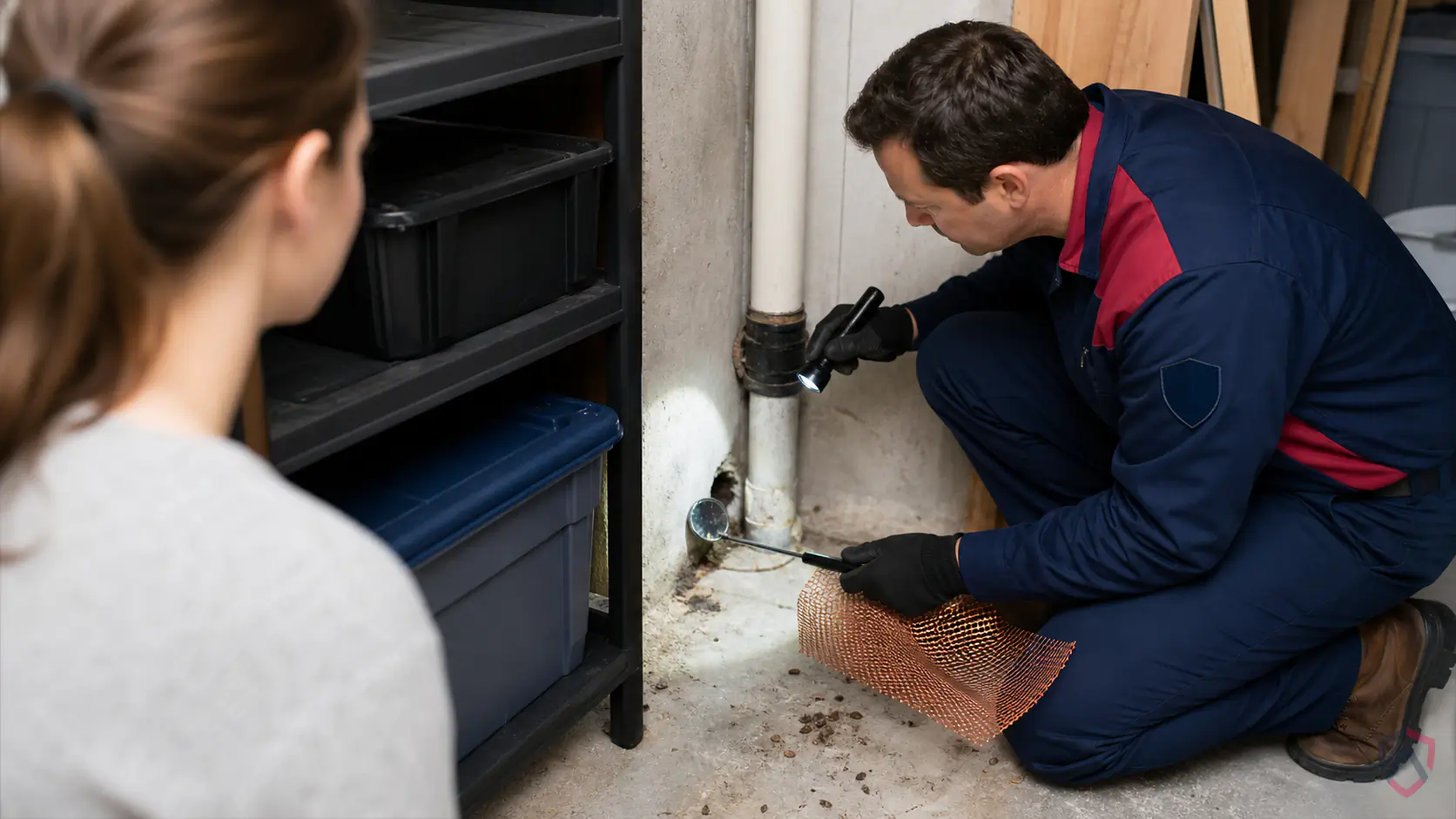
Most people discover a rodent problem in one of two ways: droppings in a drawer, or a sound in the wall at 2 am. By the time either happens, mice have usually been around for a while. Here’s the full evidence list our techs work through on an inspection, so you can read your own house like we do.
Droppings, and what they tell you beyond yes
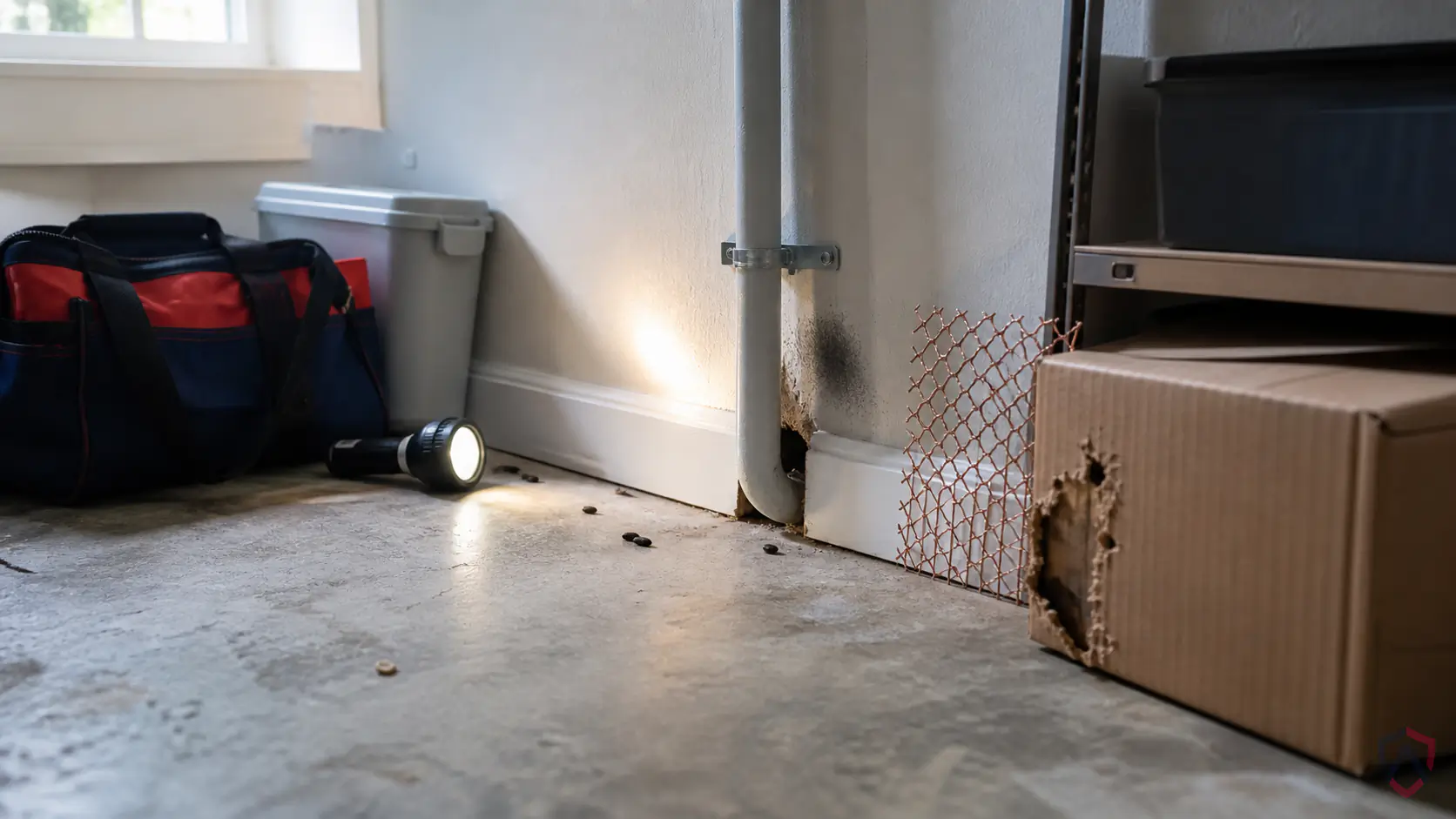
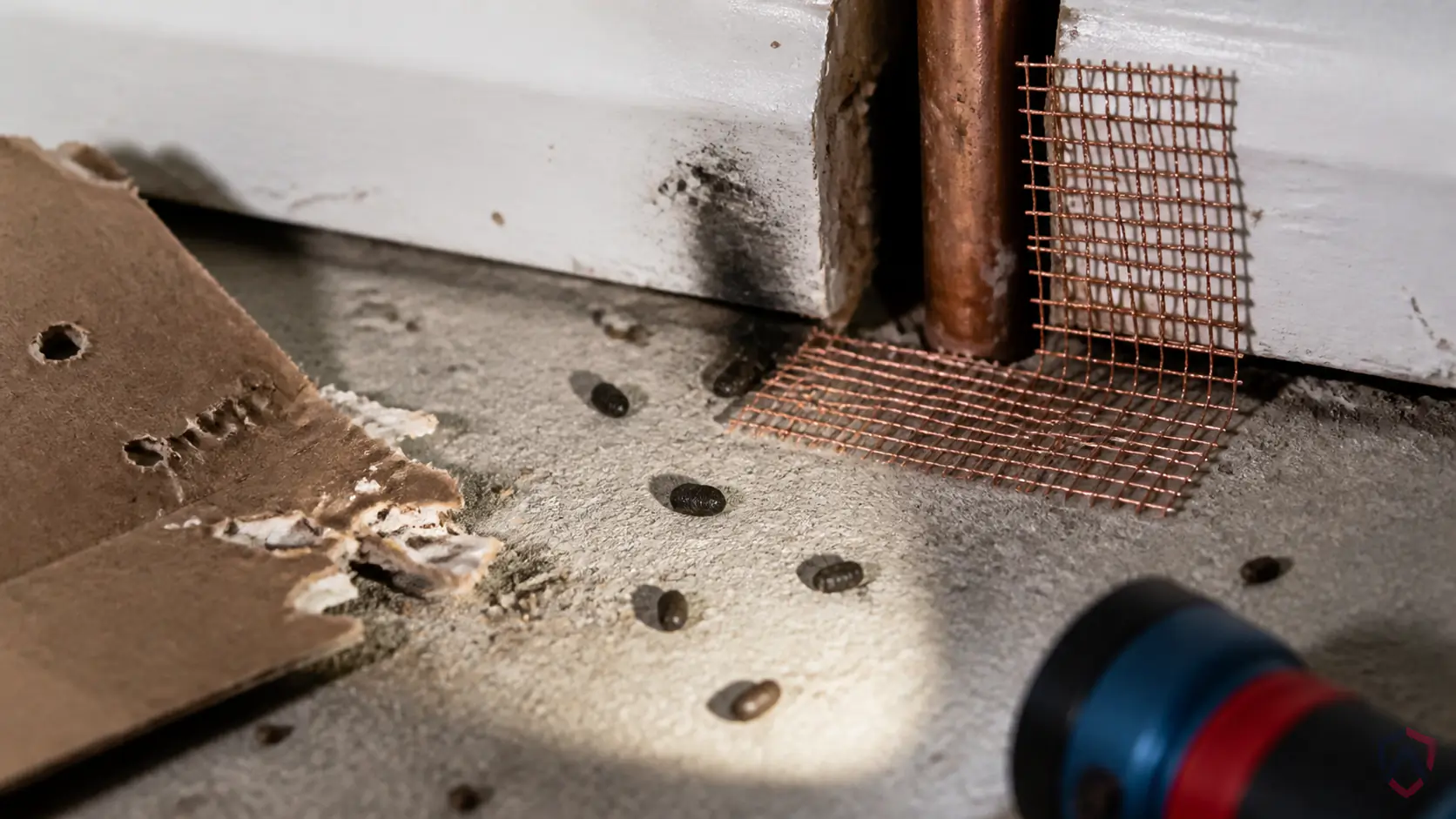
Mouse droppings are rice-grain sized with pointed ends, and location maps the activity: under the kitchen sink, in the stove drawer, along the garage wall, on top of the water heater. Fresh ones are dark and soft; old gray crumbly ones might be history rather than news. Quantity matters too, since one mouse produces 50 or more a day. A drawer full doesn’t automatically mean a horde, but widespread droppings across rooms does mean an established problem.
Gnawing and grease rubs
Rodent teeth grow continuously, so they gnaw constantly: look for fresh, pale tooth marks on stored food packaging, pet food bags, wire insulation, and the bottom corners of garage doors. Grease rubs are subtler and more telling: dark, smudgy staining along baseboards, pipe penetrations, and beam edges where oily fur repeatedly brushes the same route. A defined rub mark means a commuter route used many times.
Sounds, smells, and the dog
Scratching or skittering in walls and ceilings after dark is classic, and in the Twin Cities the differential matters: light scratching at night is often mice, while heavier rolling sounds at dawn and dusk, especially above bedrooms, points to squirrels in the attic. A persistent ammonia-like smell in a closed space suggests significant activity. And don’t dismiss the pets: a dog or cat suddenly obsessed with one cabinet or one stretch of baseboard is often the cheapest detection technology in the house.
Nests and food caches
Mice shred insulation, paper, and fabric into softball-sized nests in wall voids, drawers, engine compartments, and the back of the garage. Finding a stash of dog kibble or sunflower seeds in a boot or drawer is diagnostic; mice hoard, and a cache means the pantry line is open.
The honest caveats
Two of them. First, absence of evidence in the living space doesn’t clear the house; mice can live in a wall or attic on stored food and never cross your kitchen. Second, not every sign means mice: droppings near the garage door could be a vole that wandered in, and attic evidence might be bats, whose droppings crumble to insect fragments. Species ID drives the fix, and getting it wrong wastes a month.
What to do with a positive finding
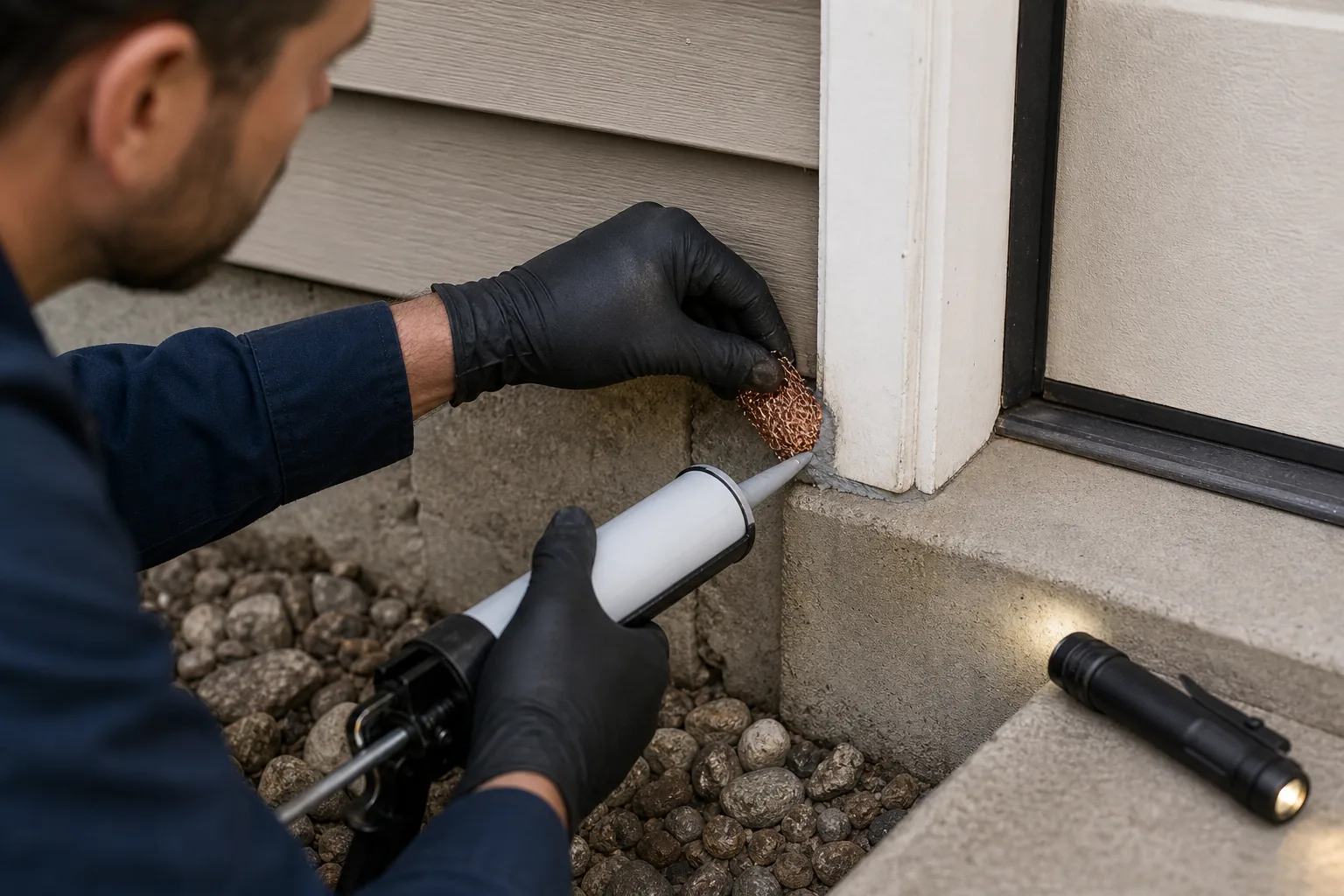
Trap first, seal second, in that order, then fix the attractants. If you found one sign, look for the others before deciding how big the problem is.
Or let us do the looking. Ankora’s rodent inspections are free anywhere in the Twin Cities metro, call (651) 556-2666.
Seeing this pest around your home?
Ankora Pest Control offers a free inspection across the Twin Cities metro. We identify the problem, explain your options honestly, and only recommend what your home actually needs.